
 Save to Pinterest
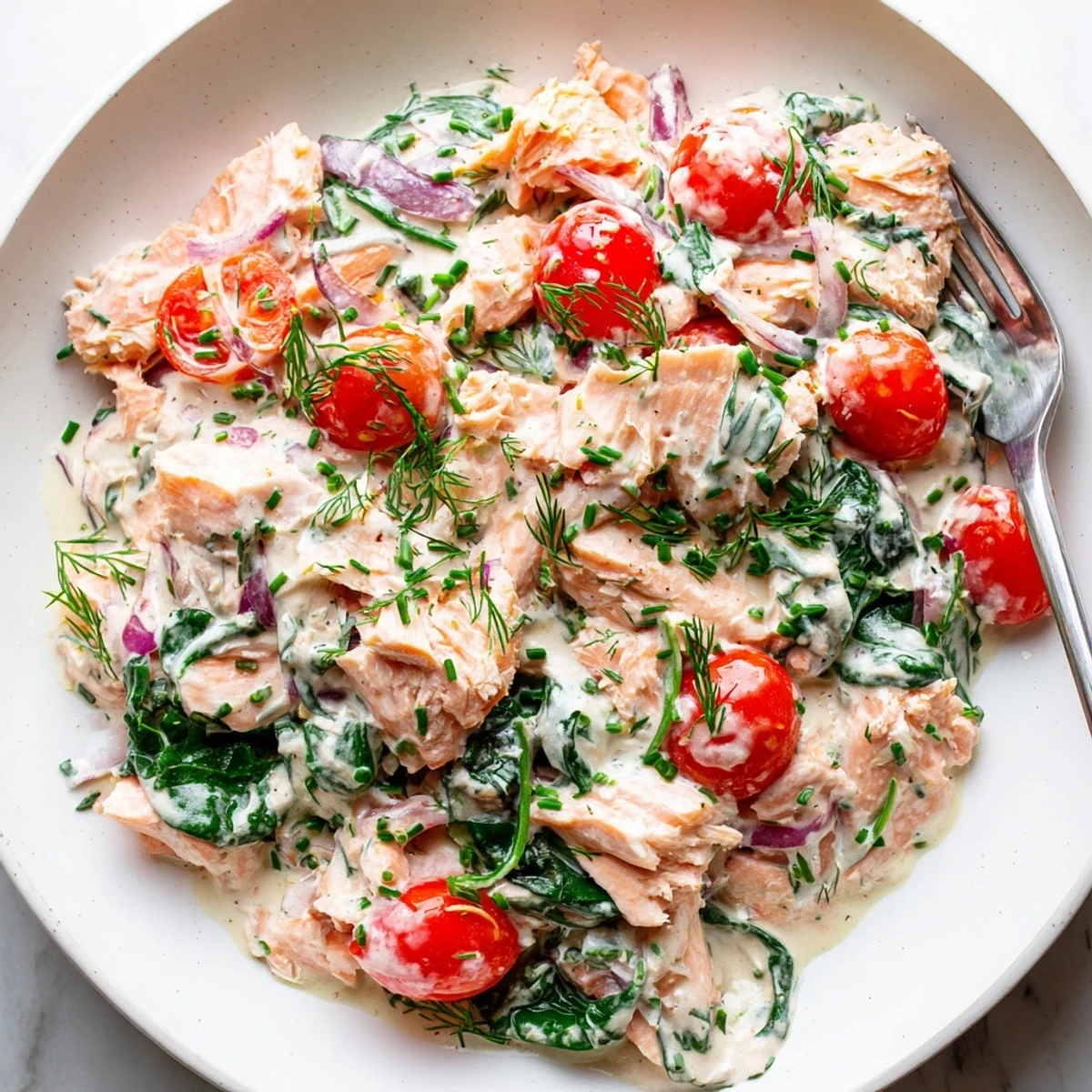
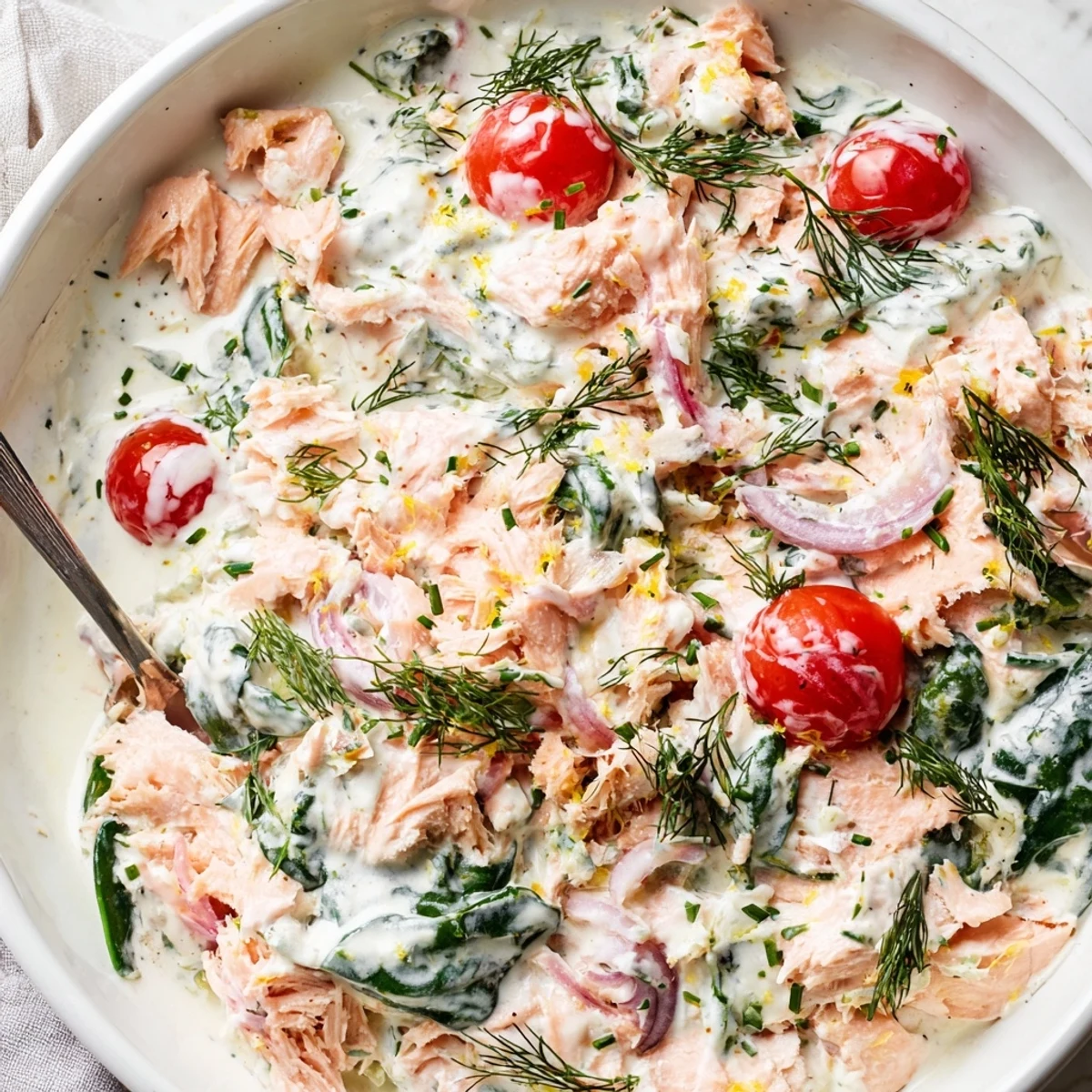
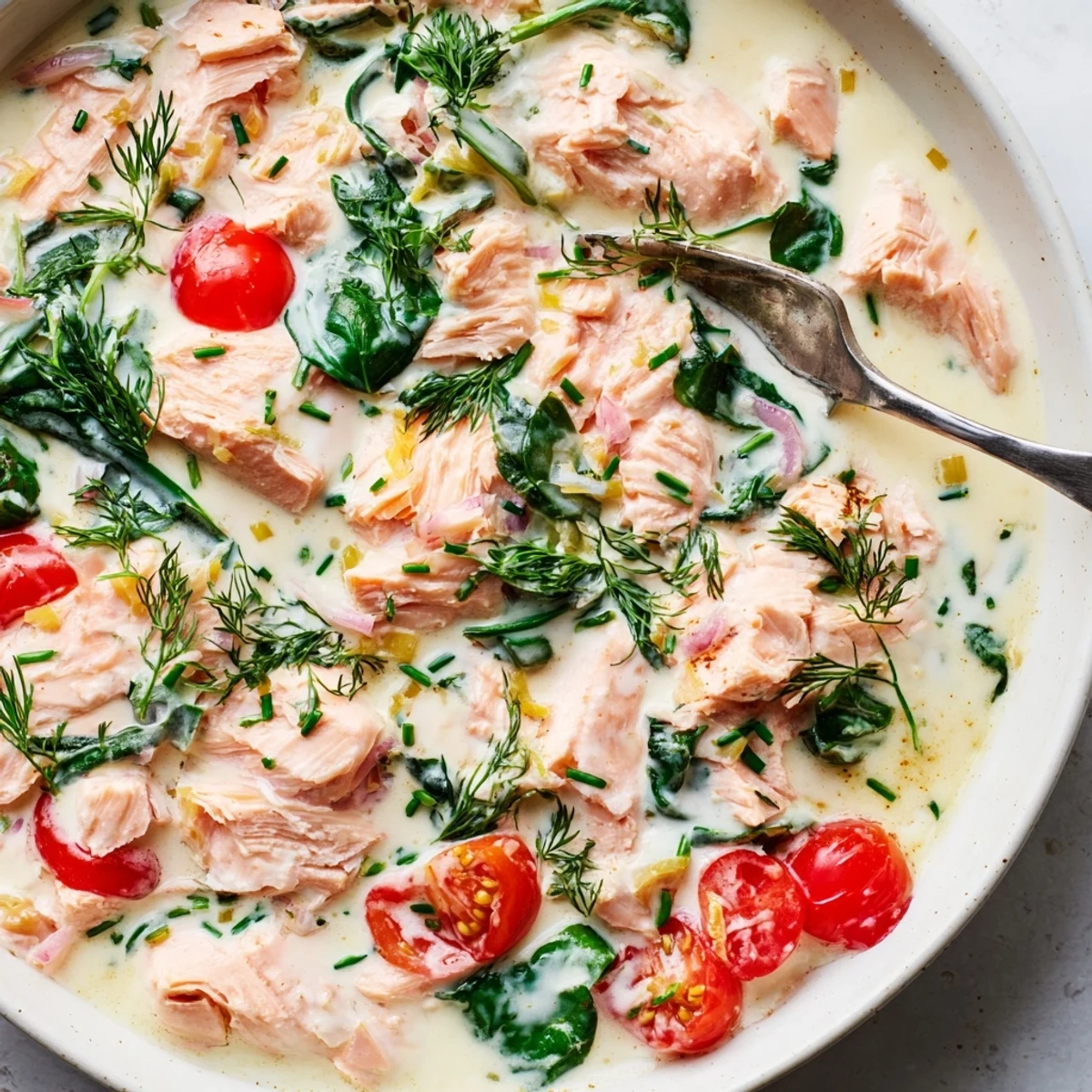
 This healthy creamy salmon skillet turns yesterday's cooked salmon into a rich, satisfying dish in just 25 minutes. Flaked salmon is gently warmed in a velvety sauce made from Greek yogurt and light cream cheese, seasoned with fresh dill and bright lemon zest.
Baby spinach and cherry tomatoes add color and nutrients, while keeping the dish low in carbs and high in protein at 32 grams per serving. Serve it over quinoa, rice, or enjoy it on its own for a light yet filling pescatarian meal.
The fridge hummed its familiar Tuesday evening song while I stared at a container of leftover salmon from the night before, wondering if I could possibly eat another reheated fillet without losing my mind. That particular evening, tired and unwilling to cook anything ambitious, I grabbed some yogurt and spinach on a whim and ended up creating something that now gets requested more than the original salmon dinner itself. The creaminess comes together in minutes, and you would never guess it started as a desperate weeknight experiment. Twenty five minutes later, I was scooping seconds and texting my sister the rough recipe in all lowercase because my hands were too busy eating to punctuate properly.
My neighbor Karen knocked on my door the following week asking what that amazing smell was, and we ended up eating the entire batch standing around my kitchen island with forks straight from the pan. She now makes it every time she meal preps salmon, which is saying something because Karen usually treats recipes as loose suggestions rather than instructions.
Ingredients
- 2 cups cooked salmon (flaked, skin and bones removed): Leftover grilled or baked salmon works beautifully, and the flaking helps it soak up every bit of that creamy sauce.
- 1/2 cup Greek yogurt (or reduced-fat creme fraiche): This is your creaminess without the heaviness, and full-fat yogurt gives the richest texture.
- 1/4 cup light cream cheese (softened): Letting it come to room temperature first prevents awkward lumps in your sauce.
- 1 cup baby spinach (chopped): Chopping helps it distribute evenly rather than clumping in wet little mounds.
- 1 cup cherry tomatoes (halved): They break down just enough to add sweetness and a pop of color against the pale sauce.
- 1/2 small red onion (thinly sliced): Red onion gives a mild bite that plays wonderfully with the richness of the salmon.
- 1 clove garlic (minced): One clove is enough here because you want it to whisper, not shout.
- 1/2 cup low-sodium chicken or vegetable broth: This thins the sauce to the right consistency while adding depth.
- 1 tablespoon fresh dill (chopped, or 1 teaspoon dried dill): Dill and salmon are old friends for good reason, and fresh is worth the extra trip to the store.
- 1/2 teaspoon lemon zest: The zest brightens everything without making it taste explicitly lemony.
- Juice of 1/2 lemon: A squeeze at the end wakes up all the flavors like a little splash of sunshine.
- 1/4 teaspoon black pepper: Freshly cracked makes a noticeable difference here.
- 1/4 teaspoon salt (to taste): Start light because the salmon and broth already bring some saltiness.
- 2 tablespoons chives (chopped): Scattered on top at the very end for a mild oniony finish and a hit of green.
- Cooked quinoa, rice, or whole-grain pasta (optional, for serving): Something to soak up the extra sauce is never a bad idea.
Instructions
- Wake Up the Aromatics:
- Heat a large non-stick skillet over medium heat with a splash of oil or broth, then sauté the sliced red onion and minced garlic for two to three minutes until everything turns soft and your kitchen smells like dinner is happening. Keep the heat moderate so the garlic colors barely but never browns.
- Wilt the Greens:
- Add the chopped spinach and halved cherry tomatoes, cooking for another two to three minutes until the spinach surrenders and the tomatoes soften enough to release a little juice. You want things just wilted, not collapsing into mush.
- Build the Creamy Sauce:
- Pour in the broth, then add the softened cream cheese and Greek yogurt, stirring constantly for about two minutes until everything melts into a smooth, cohesive sauce that coats the back of your spoon. Resist the urge to crank the heat, because patience here prevents the yogurt from separating.
- Fold in the Salmon:
- Gently fold in the flaked salmon along with the dill, lemon zest, lemon juice, salt, and pepper, handling it tenderly so the fish stays in beautiful chunks rather than turning to paste. Cook for two to three more minutes just until the salmon is warmed through and has absorbed some of that lovely sauce.
- Taste and Serve:
- Give it a taste and adjust the salt and pepper if needed, then serve hot with a generous shower of chopped chives and your choice of grains underneath to catch every drop. This is the moment where you stand over the pan and sneak one more forkful before anyone else gets near it.
 Save to Pinterest
 There is something quietly satisfying about rescuing leftovers from their sad fate and turning them into a meal that nobody recognizes as recycled. This dish taught me that the best recipes often come from an empty fridge and a little bit of audacity.
Great Swaps and Additions
Kale or Swiss chard steps in for spinach when you want something heartier with a slightly bitter edge that cuts through the richness. Tossing in leftover roasted vegetables at the same time as the salmon is a brilliant way to bulk it out and reduce waste even further. A handful of frozen peas works too, and they add a sweetness that balances the lemon beautifully.
What to Serve Alongside
A glass of cold Sauvignon Blanc beside this dish on a warm evening feels like a small but meaningful luxury, even if you are just eating at the kitchen counter. For a dairy-free version, unflavored plant-based yogurt and cream cheese work surprisingly well, though the sauce will be slightly less tangy. A simple side salad with a vinaigrette cuts through the richness and makes the whole plate feel complete.
Making It Your Own
Once you have the basic method down, this recipe bends to whatever you have on hand and whatever mood you are in. Think of it as a template rather than a rulebook.
- Try smoked salmon instead of leftover cooked for a more luxurious version that feels dinner party worthy.
- A pinch of cayenne or a few drops of hot sauce stirred in at the end adds warmth without overwhelming the delicate fish.
- Always taste before serving because the balance of salt, acid, and creaminess shifts depending on your ingredients.
 Save to Pinterest
 Keep this one in your back pocket for those nights when cooking feels like a chore but eating well still matters. Your future tired self will thank you for remembering it.
Your Recipe Questions Answered
- → Can I use canned salmon instead of leftover cooked salmon?
-
Yes, canned salmon works well. Drain it thoroughly and remove any large bones before flaking. Add it at the same stage as you would leftover cooked salmon, and heat gently until warmed through.
- → How should I store and reheat leftovers?
-
Store any leftovers in an airtight container in the refrigerator for up to 2 days. Reheat gently in a skillet over low heat, adding a splash of broth to loosen the sauce. Avoid microwaving on high, as this can make the salmon tough and cause the yogurt sauce to separate.
- → What can I substitute for Greek yogurt?
-
Reduced-fat crème fraîche is a great alternative. For a dairy-free version, use an unflavored plant-based yogurt combined with a tablespoon of nutritional yeast for added richness. Silken tofu blended until smooth also works as a creamy base.
- → Is this dish suitable for meal prep?
-
This dish is best enjoyed fresh, as the creamy sauce can thicken and the spinach may lose its texture upon storage. If meal prepping, consider keeping the sauce and salmon separate from the vegetables, then combining and reheating when ready to eat.
- → What sides pair well with creamy salmon?
-
Cooked quinoa, brown rice, or whole-grain pasta make excellent bases. For a low-carb option, serve it alongside roasted asparagus, steamed green beans, or a crisp side salad. A glass of dry Sauvignon Blanc complements the lemon-dill flavors beautifully.
- → Can I use frozen spinach instead of fresh?
-
Frozen spinach can be used in a pinch. Thaw it completely and squeeze out all excess moisture before adding to the skillet. Use about 1/3 cup of frozen spinach as a substitute for 1 cup of fresh baby spinach, since frozen spinach is more concentrated.