
 Save to Pinterest
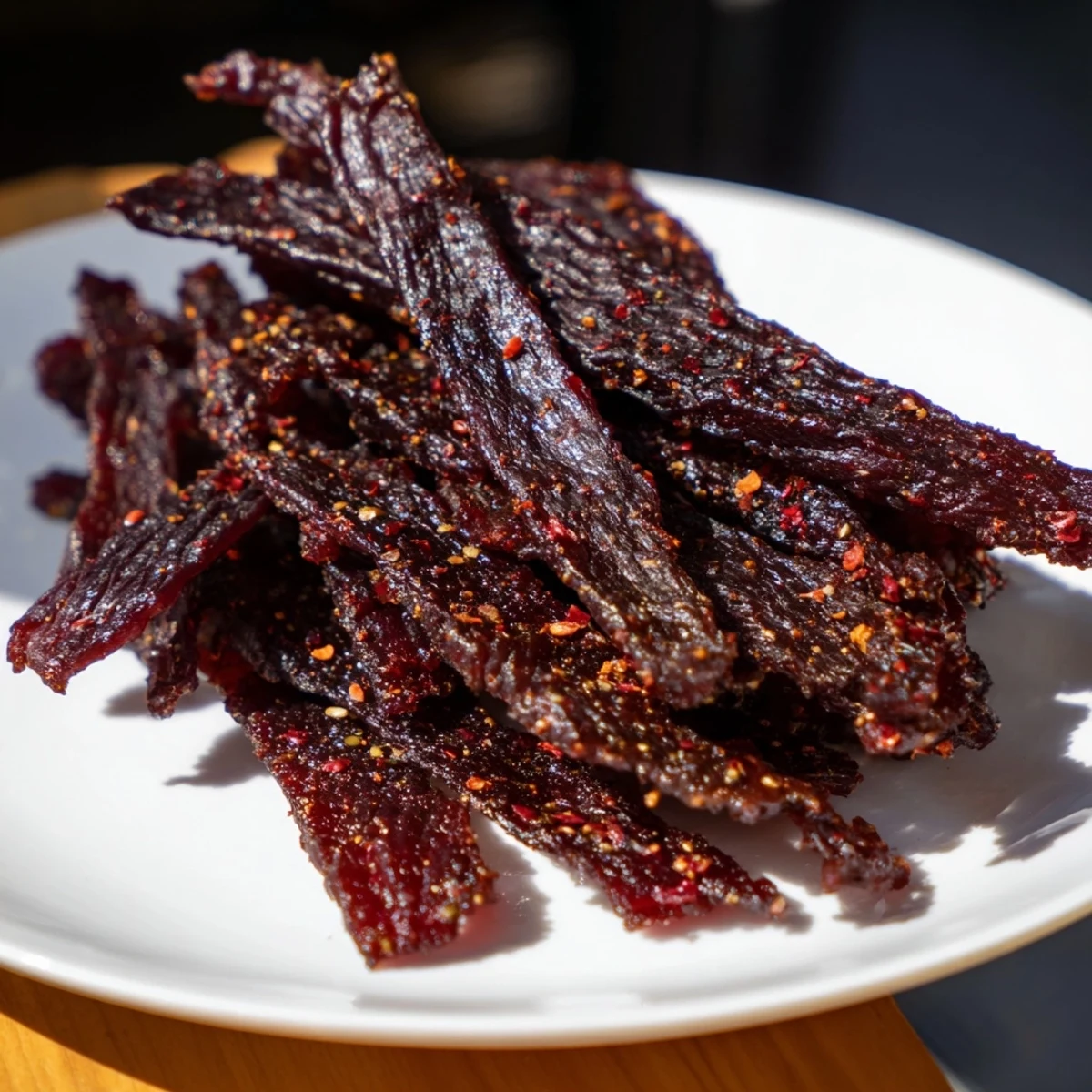
 This dish features lean beef sliced thin and marinated overnight in a savory blend including soy sauce, brown sugar, and smoked paprika. After marinating, the beef strips are slowly dried in a dehydrator or low oven until tender yet chewy. The process enhances flavor while preserving protein content, delivering a flavorful snack that's perfect for on-the-go or as a satisfying treat. Customizations like honey or additional spices can add sweetness or complexity. Store cooled pieces airtight for freshness.
I still remember the first time I made beef jerky at home—it was a rainy Sunday afternoon when my brother challenged me to recreate the expensive strips we'd been buying at the local market. Armed with a sharp knife, some soy sauce, and pure curiosity, I discovered something magical: that perfectly marinated, slowly dried beef could rival anything store-bought, and it tasted like accomplishment. Now, years later, homemade jerky is my go-to snack, and making a batch has become a meditative kitchen ritual I return to whenever I need something deeply satisfying.
I made this for the first time for a camping trip with college friends, and I'll never forget how they fell silent when they tried it—that moment when someone realizes you've just changed their understanding of what jerky can be. Since then, I've made it for road trips, hikes, and quiet evenings at home, and it's become something people actually ask me to bring to gatherings.
Ingredients
- Lean beef (top round, flank, or sirloin), 1 kg trimmed: This is where everything starts—the lean cuts mean less waste and chewier jerky that stays fresh longer. Ask your butcher to point you toward the leanest option; they know which cuts are perfect for this.
- Soy sauce, 120 ml: The backbone of the marinade, bringing umami depth and saltiness. Tamari or gluten-free soy sauce swaps in seamlessly if you need it.
- Worcestershire sauce, 60 ml: This adds mysterious complexity and tanginess—don't skip it, even though it seems like a small amount.
- Brown sugar, 2 tbsp: Balances the saltiness with subtle sweetness and helps create that glossy exterior as it dries.
- Smoked paprika, 1 tbsp: Here's where the magic happens—this gives jerky its signature warmth and a whisper of smokiness that makes people ask what your secret is.
- Black pepper, freshly ground, 2 tsp: Grind it fresh if you possibly can; pre-ground loses its punch.
- Garlic powder, 1 tsp: Adds savory depth without the moisture that fresh garlic would introduce.
- Onion powder, 1 tsp: Works with the garlic to create an aromatic backbone.
- Red pepper flakes, 1 tsp (optional): Only if you want heat; it builds gradually and lingers pleasantly.
Instructions
- Chill the beef first:
- Pop your beef in the freezer for an hour—this firms it up just enough that slicing becomes effortless instead of frustrating. Cold meat doesn't shred; it cuts clean.
- Slice with intention:
- Using a sharp knife, cut against the grain into strips about 5mm thick. This is crucial: cutting against the grain means shorter muscle fibers, which translates to tender, chewy jerky rather than stringy jerky. Take your time here.
- Build your marinade:
- Whisk together soy sauce, Worcestershire, brown sugar, smoked paprika, pepper, garlic powder, onion powder, and red pepper flakes in a bowl. The mixture should smell extraordinary—that's your first hint that this is going to be delicious.
- Coat every piece:
- Add beef strips to the marinade, making sure each one gets thoroughly coated. Use your hands if needed; there's no substitute for ensuring every surface knows the flavor.
- Let time do the work:
- Cover the bowl and refrigerate for 8 hours or overnight, stirring occasionally. I often do this step before bed and wake up to the smell of marinade-infused beef, which is a small daily joy.
- Prepare for drying:
- Heat your dehydrator to 70°C (160°F), or set your oven to its absolute lowest temperature—usually 50-60°C (120-140°F). If your oven doesn't go that low, crack the door open slightly and monitor carefully.
- Pat and arrange:
- Remove beef from marinade and blot dry with paper towels—this removes excess moisture that would extend drying time. Lay strips in a single layer on dehydrator trays or on a wire rack set over a baking sheet.
- The patient drying phase:
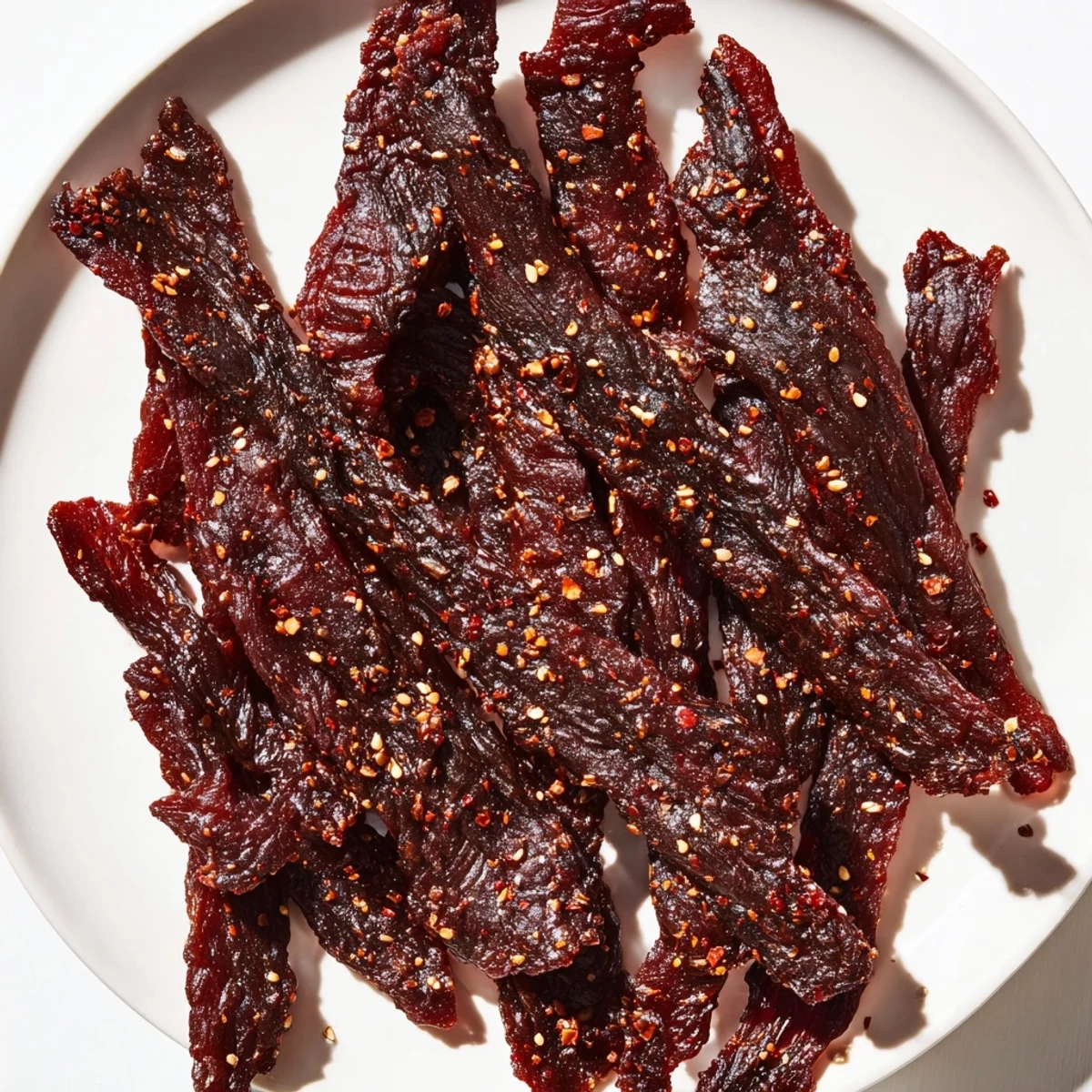
- This is where you learn patience. Dehydrators take 3-4 hours; ovens take 4-5 hours with the door slightly ajar. You're aiming for strips that bend without breaking and feel dry to the touch but still have a tiny bit of pliability—not brittle, not soft.
- Cool and store:
- Once done, let jerky cool completely on the rack before transferring to an airtight container. This cooling step lets residual moisture redistribute, creating the perfect final texture.
 Save to Pinterest
 The first time someone I made this for said, 'This tastes like love,' I understood that food isn't just fuel—it's a way of saying I care enough to spend hours slowly drying meat just so you can have something perfect to snack on. That's when jerky stopped being a snack and became something more.
Flavor Variations That Work
Once you've mastered the base recipe, the fun begins. For a sweeter version, add a tablespoon of honey or maple syrup to the marinade—it caramelizes slightly during drying and creates an addictive sweet-savory note. If you want warmth and earthiness, experiment with cumin or coriander; they transform the flavor profile without overpowering. Liquid smoke is a game-changer if you want that deep, charred taste without a smoker. I've learned through trial and error that you can swap the smoked paprika for regular paprika and add a teaspoon of liquid smoke instead, creating a completely different but equally delicious jerky. The magic is that this base marinade is flexible enough to make your own signature jerky.
Storage and Longevity
Properly dried jerky keeps beautifully in an airtight container at room temperature for about a week, but refrigeration extends it to 2-3 weeks, and freezing takes it to several months. I've learned the hard way that moisture is jerky's enemy—those little silica gel packets that come in supplement bottles aren't just marketing; they genuinely help maintain crispness. Some people store jerky in mason jars with a packet tucked inside, and I've stolen this trick shamelessly. The moment jerky starts to feel soft or tacky, it's telling you it's time to refrigerate or freeze it.
Pairing and Serving Suggestions
Jerky is the ultimate solo snack, but it transforms into something special when paired thoughtfully. A robust red wine—think Cabernet or Syrah—complements the savory depth beautifully, and craft beers with bold hop profiles or rich, roasty notes make jerky taste even more satisfying. It's also incredible on charcuterie boards, alongside aged cheeses and crusty bread, where it adds a chewy textural contrast. I've brought it on hikes, road trips, late-night gaming sessions, and quiet office afternoons, and it's been perfect every single time.
- Pair with wine or beer for an elevated snacking experience that feels a bit luxurious.
- Add to trail mix with nuts and dark chocolate for sweet-savory trail snacking perfection.
- Keep a container in your car, backpack, or desk drawer for moments when you need something genuinely nourishing.
 Save to Pinterest
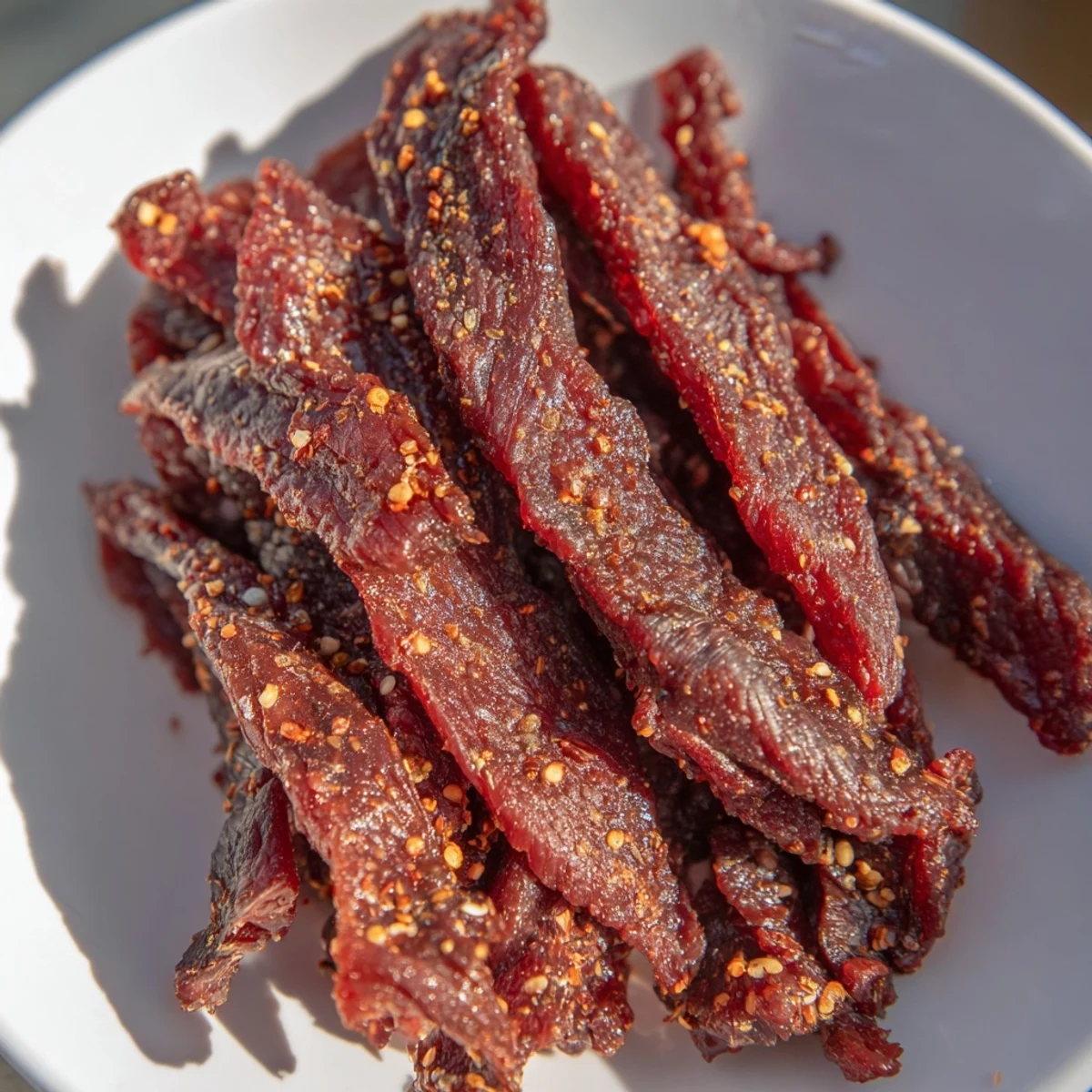
 Making homemade beef jerky is one of those kitchen skills that seems intimidating until you've done it once, and then it becomes almost meditative. I hope you make this, share it, and discover that perfect texture that makes someone's eyes light up with surprise.
Your Recipe Questions Answered
- → What cut of beef works best?
-
Lean cuts like top round, flank, or sirloin are ideal for even drying and tender texture.
- → How long should the beef marinate?
-
Marinating for about 8 hours or overnight allows flavors to deeply penetrate the meat.
- → What drying methods can I use?
-
Both a dehydrator set to 70°C (160°F) or a low-temperature oven can be used for drying the beef strips.
- → How can I adjust flavor intensity?
-
Adding honey or maple syrup sweetens, while spices like cumin and coriander introduce complex notes.
- → How do I store the dried beef strips?
-
Keep the cooled strips in an airtight container; refrigeration extends freshness up to two weeks.
- → Can this be made gluten-free?
-
Use gluten-free tamari instead of regular soy sauce and verify Worcestershire sauce ingredients to ensure gluten-free status.