
 Save to Pinterest
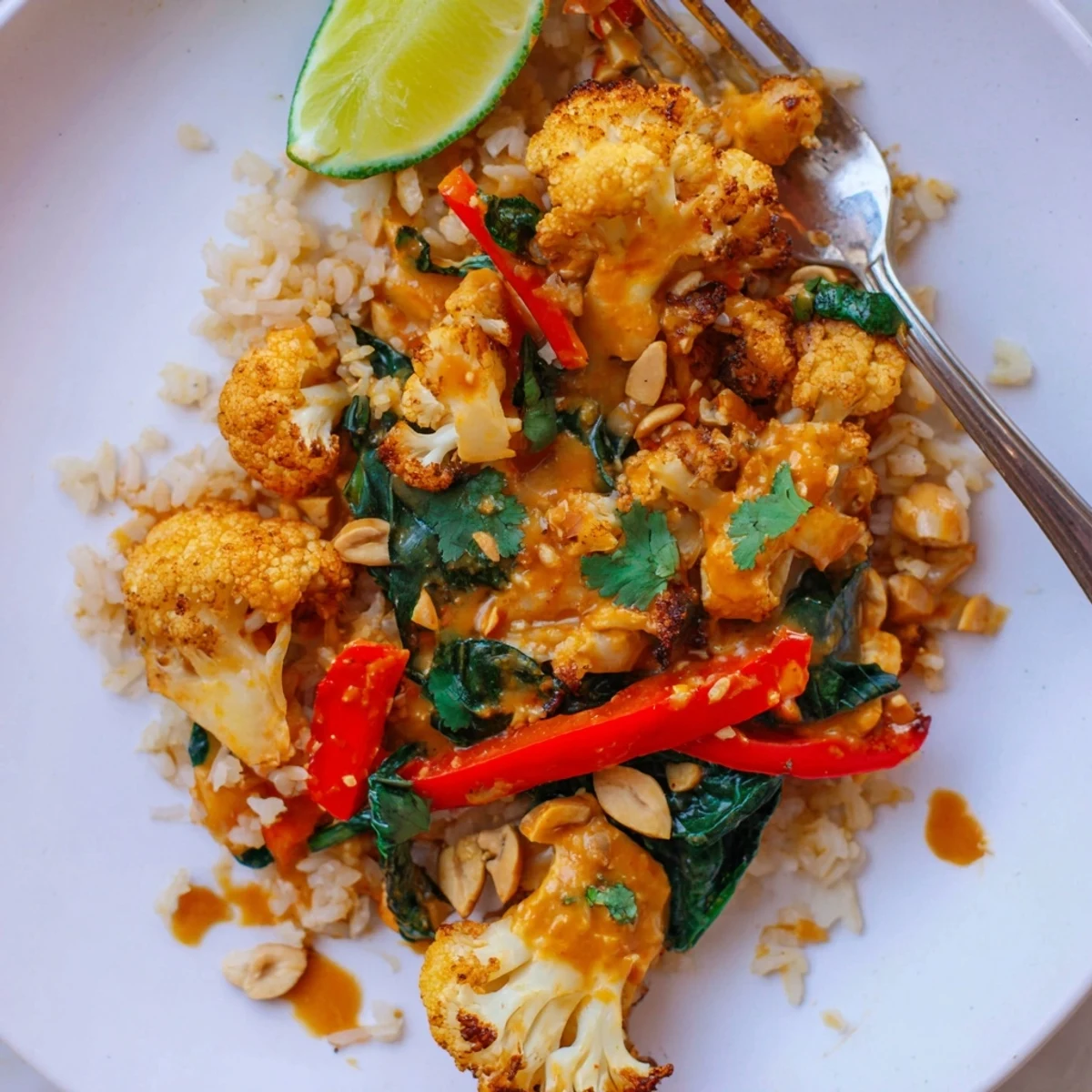
 Roast cauliflower florets and red bell pepper at 220°C until edges brown, about 25–30 minutes. Simmer jasmine or basmati rice until tender. Sauté onion, garlic and ginger, stir in red curry paste, then add coconut milk and soy or tamari to form a glossy sauce. Combine with roasted vegetables, wilt spinach if using, squeeze lime, and garnish with cilantro and toasted nuts. Total time about 1 hour.
The smell of turmeric dust floating through my apartment on a rainy Tuesday is what made me fall for roasted cauliflower curry. I had half a head of cauliflower sitting in the crisper and a jar of red curry paste I kept ignoring, and something about the grey weather made me want both at once. The oven did most of the work while I paced around listening to music, and by the time the edges of those florets turned golden, I knew this was going to become a regular thing. It has been on my weekly rotation ever since.
I made this for my neighbor Divya once when she stopped by to return a borrowed pot, and she stood in my kitchen eating straight from the skillet with a wooden spoon. We ended up sitting on the floor because the table was covered in mail, and she told me the turmeric reminded her of her grandmothers kitchen in Mumbai. That spontaneous dinner turned into a standing Thursday night tradition that lasted all winter.
Ingredients
- 1 medium head cauliflower, cut into florets: The star of the dish, so pick one that feels heavy for its size with tight, creamy florets.
- 1 large red bell pepper, sliced: Adds sweetness and color that balances the earthy curry heat.
- 1 small onion, finely chopped: Aromatics are the backbone of any good curry sauce, so do not skip this.
- 2 cloves garlic, minced: Fresh garlic makes a noticeable difference here over the jarred kind.
- 1 inch piece fresh ginger, grated: Grate it directly into the pan so you catch every drop of that spicy juice.
- 2 cups baby spinach (optional): Wilts down beautifully and adds a nutritional boost without changing the flavor.
- 1 cup jasmine or basmati rice, rinsed: Rinse until the water runs clear for the fluffiest grains.
- 2 cups water: Standard ratio for both jasmine and basmati on the stovetop.
- 1/2 tsp salt: For the rice cooking liquid.
- 2 tbsp red curry paste: Start with two tablespoons and adjust upward if you like it fiery.
- 1 can (400 ml) coconut milk: Full fat gives the richest sauce, but light works in a pinch.
- 1 tbsp soy sauce or tamari: Tamari keeps it gluten free and adds a deeper, rounder umami note.
- 1 tsp ground turmeric: Dusting the cauliflower before roasting gives it that gorgeous golden color.
- 2 tbsp olive oil (divided): One tablespoon for roasting vegetables and one for the skillet base.
- Juice of 1 lime: Added at the end to brighten the whole dish and cut through the richness.
- Fresh cilantro, chopped: A generous handful finishes the plate with fresh herbaceousness.
- Lime wedges: For serving so everyone can adjust their own acidity.
- Toasted cashews or peanuts (optional): The crunch on top takes this from good to unforgettable.
Instructions
- Roast the vegetables:
- Preheat your oven to 220 degrees Celsius, toss the cauliflower florets and sliced bell pepper with olive oil, a pinch of salt, and the turmeric until evenly coated. Spread them in a single layer on a parchment lined baking sheet and roast for 25 to 30 minutes, flipping halfway through, until the edges are deeply caramelized and the stems are tender.
- Cook the rice:
- While the vegetables roast, bring rinsed rice, water, and salt to a boil in a saucepan, then reduce the heat to low, cover tightly, and simmer for 12 to 15 minutes. When the water is fully absorbed, pull it off the heat and fluff gently with a fork.
- Build the curry base:
- In a large skillet over medium heat, warm the remaining olive oil and sauté the chopped onion, minced garlic, and grated ginger for 2 to 3 minutes until everything softens and your kitchen smells incredible. Stir in the red curry paste and let it toast for about a minute until it darkens slightly and becomes intensely fragrant.
- Simmer the sauce:
- Pour in the coconut milk and soy sauce, stirring to blend the curry paste into a smooth, vibrant orange sauce. Let it bubble gently for 3 to 4 minutes until it thickens enough to coat the back of a spoon.
- Combine and finish:
- Add the roasted cauliflower and bell pepper to the sauce, tossing to coat every piece, then fold in the baby spinach if using and let it wilt down. Squeeze in the lime juice, taste for salt and heat, and adjust as needed.
- Plate and garnish:
- Spoon the curry over mounds of fluffy rice and finish with chopped cilantro, lime wedges, and a scattering of toasted cashews or peanuts for crunch.
 Save to Pinterest
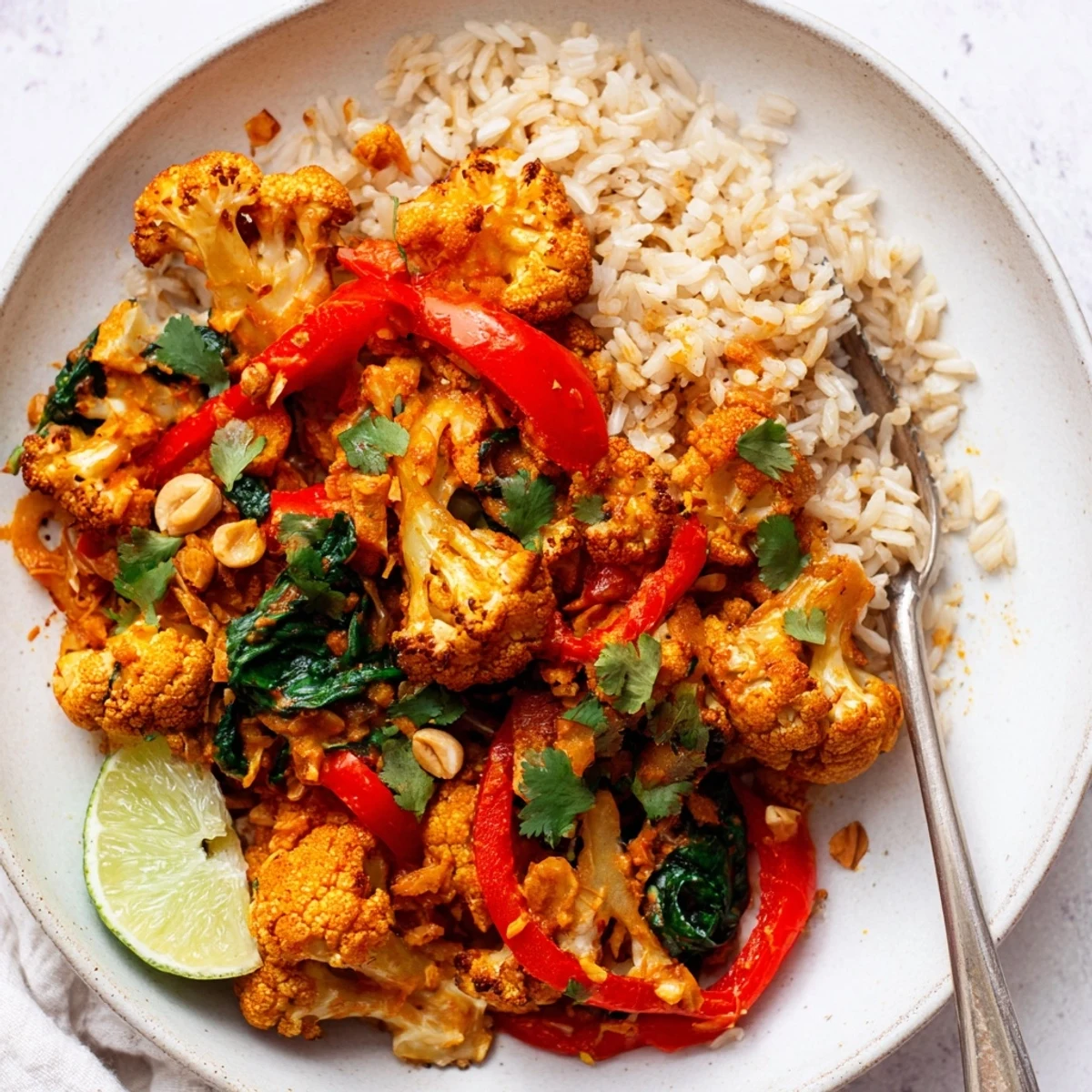
 There is something about the way golden cauliflower looks swimming in that coconut red curry sauce that makes the whole kitchen feel warmer, even when the windows are fogged up from cooking.
Making It Your Own
This recipe is endlessly adaptable once you understand the basic structure of roasting vegetables and building a quick curry sauce. Toss in chickpeas for extra protein, or scatter grilled tofu cubes on top if you want something heartier. Frozen peas or diced carrots work beautifully roasted alongside the cauliflower, and a handful of torn fresh basil at the end is a lovely twist on the cilantro garnish.
Getting the Spice Level Right
Red curry paste heat varies wildly between brands, so taste yours on the tip of a spoon before you commit. Two tablespoons is a solid middle ground, but I have had jars that were downright tame and others that cleared my sinuses with half that amount. If you overspice, a spoonful of coconut cream stirred in at the end will mellow things out beautifully.
Pairings and Leftovers
A crisp Sauvignon Blanc or a cold light lager cuts right through the richness of the coconut milk. Leftovers keep beautifully in the fridge for up to three days and actually taste better the next day when the flavors have had time to mingle. Just reheat gently on the stove with a splash of water to loosen the sauce.
- The curry freezes well without the rice, so make a double batch and stash half for a lazy weeknight.
- If the sauce separates after refrigeration, just stir it vigorously while reheating and it will come back together.
- Always garnish after reheating, never before storing, so nothing gets soggy.
 Save to Pinterest
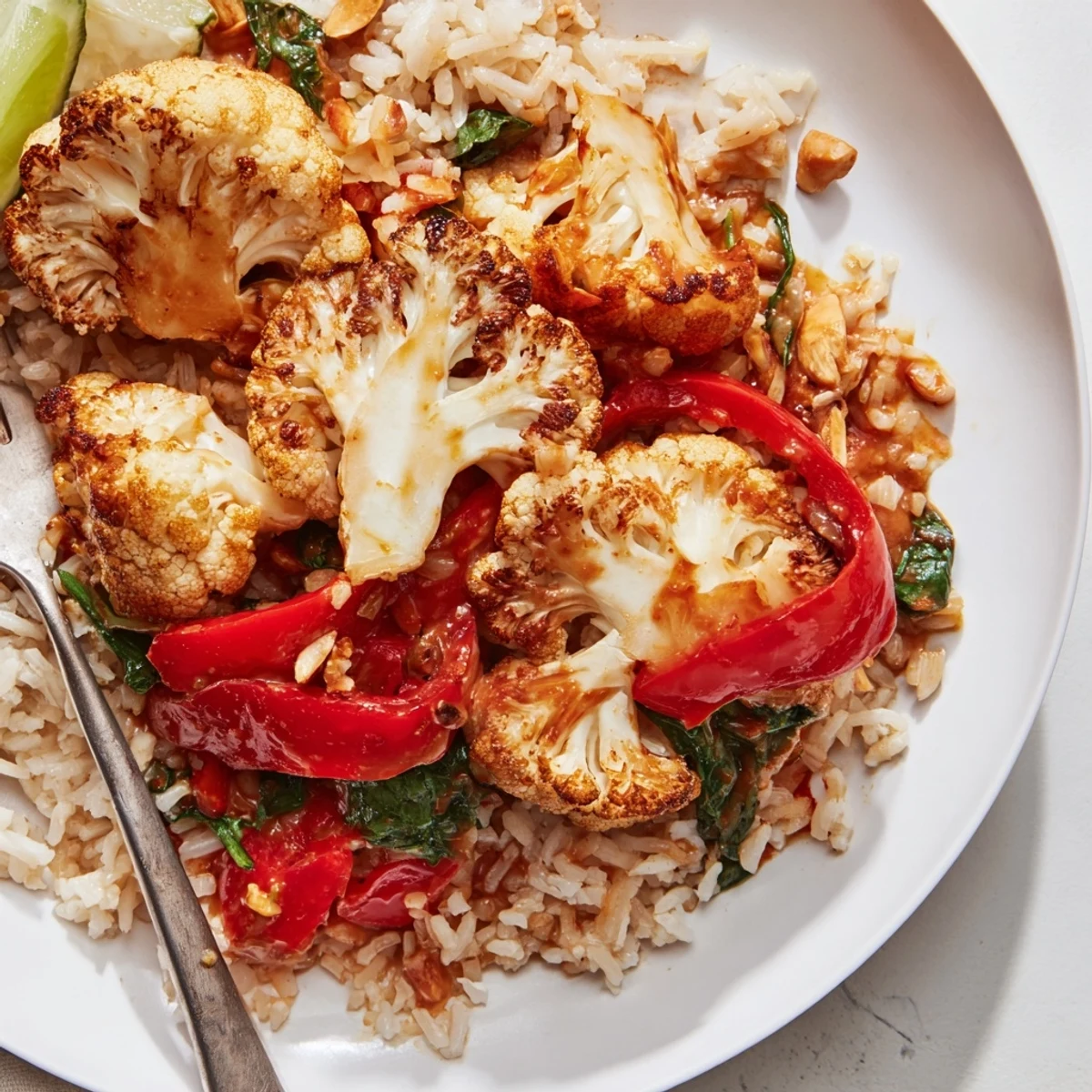
 Some dishes feed you and some dishes feed your soul, and this golden bowl of curry has a way of doing both on the nights you need it most. Share it with someone who showed up at your door unexpectedly, or keep it all to yourself with no regrets.
Your Recipe Questions Answered
- → How can I increase the heat level?
-
Boost heat by adding more red curry paste, a pinch of cayenne, or sliced fresh chilies. Taste as you go to keep the balance of spice, coconut, and acidity from the lime.
- → Which rice works best with this dish?
-
Jasmine or basmati are ideal for their fragrance and fluffy texture. Rinse the grains before cooking and use a 1:2 rice-to-water ratio, then simmer covered until tender.
- → How do I make the meal nut-free?
-
Omit toasted cashews or peanuts; substitute with roasted pumpkin seeds or simply finish with extra cilantro and a squeeze of lime for crunch and brightness.
- → Can I add a protein for a heartier plate?
-
Yes—stir in cooked chickpeas, pan-fried tofu, or grilled tempeh when you add the roasted vegetables to the sauce. They absorb the curry flavors and boost protein.
- → What's the best way to reheat leftovers?
-
Gently reheat in a skillet over medium heat with a splash of coconut milk or water to loosen the sauce, or microwave covered, stirring halfway to ensure even warming.
- → Any tips for roasting the vegetables evenly?
-
Cut cauliflower into similar-sized florets, spread in a single layer on the baking sheet, and turn once halfway through roasting to encourage even browning and caramelization.