
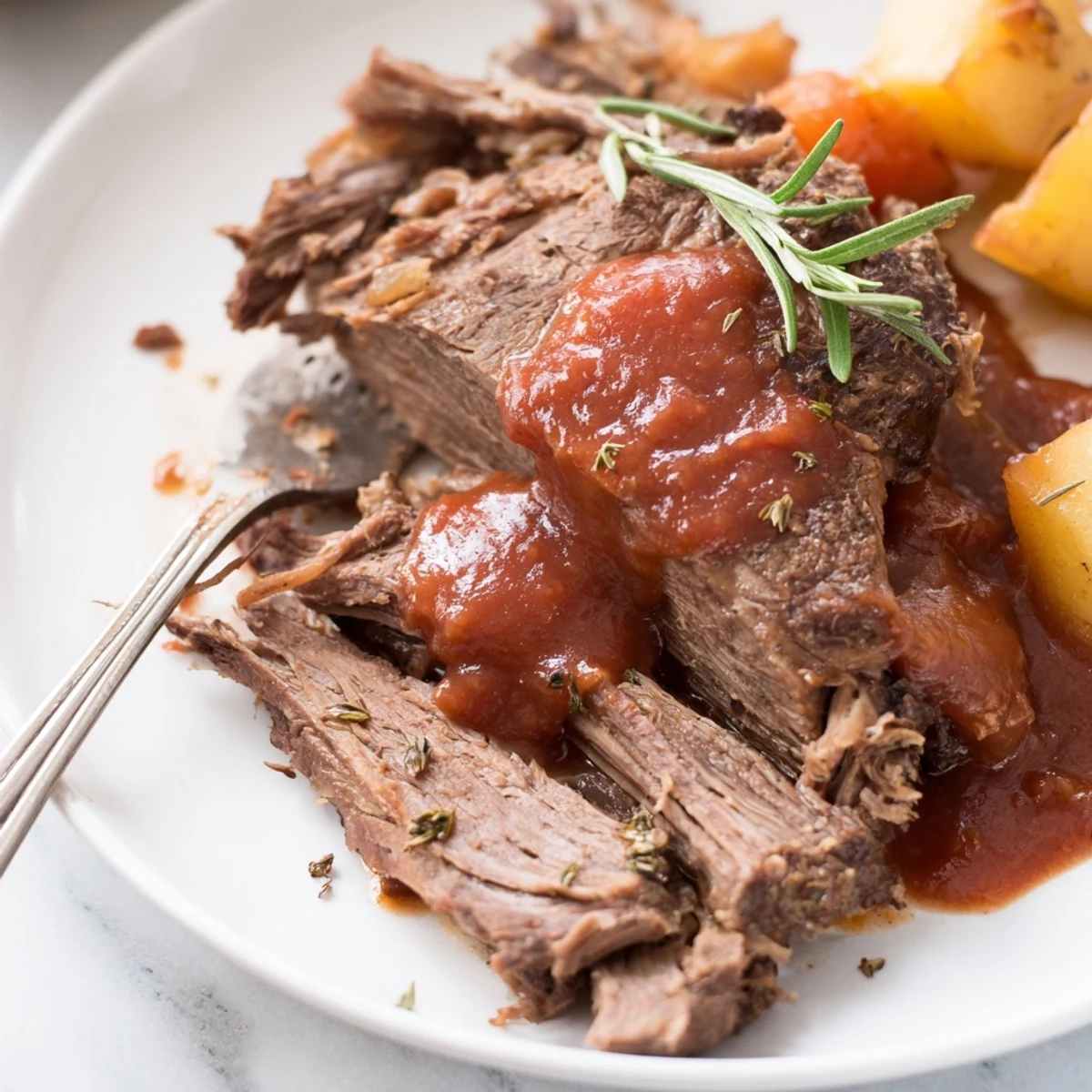
 Save to Pinterest
 This classic American pot roast transforms a humble beef chuck into a fork-tender masterpiece through low, slow braising. Searing the meat first builds a deep, caramelized crust, while dry red wine deglazes the pan, releasing every flavorful bit.
Carrots, Yukon gold potatoes, celery, and onions cook alongside the beef, soaking up the rich, herby braising liquid made fragrant with thyme, rosemary, and bay leaves. The result is a complete, hearty meal that practically fills itself with comfort.
Plan for about 20 minutes of hands-on prep and roughly 3 hours of unhurried oven time. Serve the sliced or shredded beef with its root vegetables and spoonfuls of savory pan juices for a satisfying family dinner.
The rain was hammering the kitchen window so hard that Tuesday evening that the idea of anything other than a pot roast felt like a betrayal of the season. I had a massive chuck roast sitting in the fridge, already two days past when I promised myself I would cook it, and the guilt was starting to smell almost as strong as the meat. Something about the way a Dutch oven transforms a tough, stubborn cut of beef into something that falls apart under a fork still feels like a small kitchen miracle every single time.
My neighbor Dave knocked on the door while the roast was in the oven, ostensibly to return a borrowed ladder, but really because the smell had traveled down the driveway and he wanted to know what was happening in my kitchen. I invited him to stay, and he ended up seated at my counter for two hours, eating half the roast and telling me stories about his mother Sunday dinners in Vermont. He now texts me every time it rains to ask if I am making pot roast again.
Ingredients
- Beef chuck roast (3 to 4 lb): Chuck is the undisputed king of pot roasts because its generous marbling melts during the long braise and keeps the meat incredibly moist and flavorful.
- Carrots (3 large, peeled and cut into 2-inch pieces): Cut them thick so they hold their shape through hours of cooking without turning to mush.
- Yukon gold potatoes (4 medium, quartered): Yukon golds strike the perfect balance between starchy and waxy, absorbing broth flavor while maintaining a creamy texture.
- Celery stalks (2, cut into 2-inch pieces): Celery quietly builds the aromatic backbone of the braise, adding a subtle earthy sweetness you would miss if it were gone.
- Yellow onion (1 large, sliced): Onions break down and melt into the braising liquid, naturally thickening and sweetening the sauce.
- Garlic cloves (4, smashed): Smashing rather than mincing releases mild, sweet garlic flavor that permeates the broth without overpowering it.
- Beef broth (2 cups, gluten-free if needed): Use a broth you would drink on its own, because that liquid becomes your sauce and its quality matters enormously.
- Dry red wine (1 cup, optional): Wine adds a layer of complexity and acidity that broth alone cannot replicate, though more broth works fine in a pinch.
- Tomato paste (2 tablespoons): A small amount of concentrated tomato brings umami depth and helps develop a gorgeous rich color in the braising liquid.
- Kosher salt (2 teaspoons) and black pepper (1 teaspoon): Season generously before searing to build a flavorful crust on every side of the roast.
- Dried thyme (1 teaspoon) and dried rosemary (1 teaspoon): These classic herbs pair naturally with beef and root vegetables, creating that unmistakable comfort food aroma.
- Bay leaves (2): Always remove them before serving, but never skip them, because they add a subtle complexity that ties all the flavors together.
- Olive oil (2 tablespoons): Used for searing the roast and sauteing the vegetables, a good olive oil adds fruity depth to the fond.
Instructions
- Preheat and prep the roast:
- Set your oven to 325 degrees Fahrenheit and pat the chuck roast completely dry with paper towels, because moisture is the enemy of a good sear. Season every side generously with the kosher salt and black pepper.
- Build the crust:
- Heat olive oil in a large Dutch oven over medium-high heat until it shimmers, then lay the roast in without crowding it. Sear each side for 3 to 4 minutes until you get a deep golden brown crust, then set the roast aside on a plate.
- Wake up the vegetables:
- In the same pot with all those beautiful stuck-on bits, toss in the onions, carrots, and celery, sauteing for about 5 minutes until they soften and pick up color. Stir in the smashed garlic and tomato paste, cooking for one more minute until fragrant.
- Deglaze with wine:
- Pour in the red wine and scrape up every last browned bit from the bottom of the pot, because that fond is pure concentrated flavor. Let the wine reduce by half, about 2 to 3 minutes, so the alcohol cooks off and the liquid becomes syrupy.
- Bring it all together:
- Nestle the roast back into the pot, then scatter the quartered potatoes, thyme, rosemary, and bay leaves around it. Pour in the beef broth until it comes halfway up the sides of the meat.
- Braise low and slow:
- Bring everything to a gentle simmer on the stovetop, then cover with a tight-fitting lid and transfer the whole pot into the oven. Let it braise for 2.5 to 3 hours, checking near the end with a fork to see if the meat yields without resistance.
- Rest and serve:
- Carefully remove the roast and vegetables to a serving platter, discarding the bay leaves. Skim excess fat from the pan juices if you like, then slice or pull the beef into chunks and ladle everything generously with that magnificent sauce.
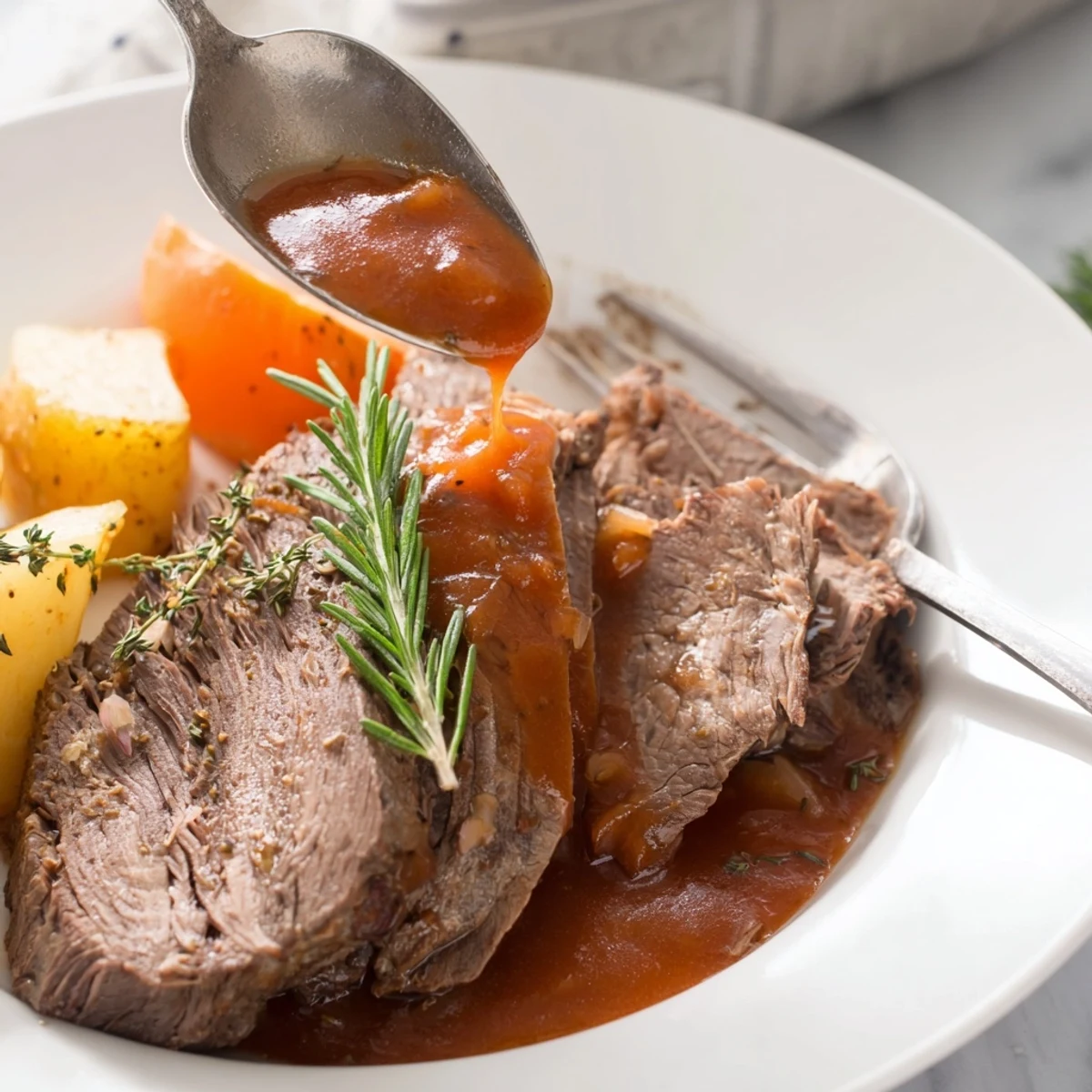 Save to Pinterest
 There is a specific quiet that settles over a kitchen when a pot roast comes out of the oven, the kind where nobody speaks for a moment because the aroma has already started the meal before anyone sits down.
Choosing the Right Cut of Beef
Not all roasts braise the same way, and learning this the hard way cost me a perfectly good Sunday dinner. Chuck roast is ideal because it has enough connective tissue and fat to break down into silky tenderness over a long braise. Round roast looks similar but is far too lean, and it will dry out and turn stringy no matter how much broth you pour over it.
What to Serve Alongside
Crusty bread is non-negotiable in my house when pot roast is on the table, because sopping up the braising liquid might actually be the best part of the entire meal. A simple bitter green salad with a sharp vinaigrette cuts through the richness beautifully. A glass of the same dry red wine you cooked with ties everything together with almost no effort.
Making It Your Own
Once you have the basic technique down, this recipe bends to whatever you have on hand or whatever mood strikes you. Mushrooms added in the last hour bring an earthy depth that pairs wonderfully with the beef. Parsnips can stand in for or join the carrots, adding a sweet, nutty note that surprises people in the best way.
- Try adding a tablespoon of soy sauce or Worcestershire to the braising liquid for a sneaky umami boost nobody will be able to identify but everyone will notice.
- A sprig of fresh rosemary from the garden elevates the dried herbs without overpowering the dish.
- Always taste the sauce before serving and adjust the salt, because braising concentrates flavors and the final seasoning may need a gentle nudge.
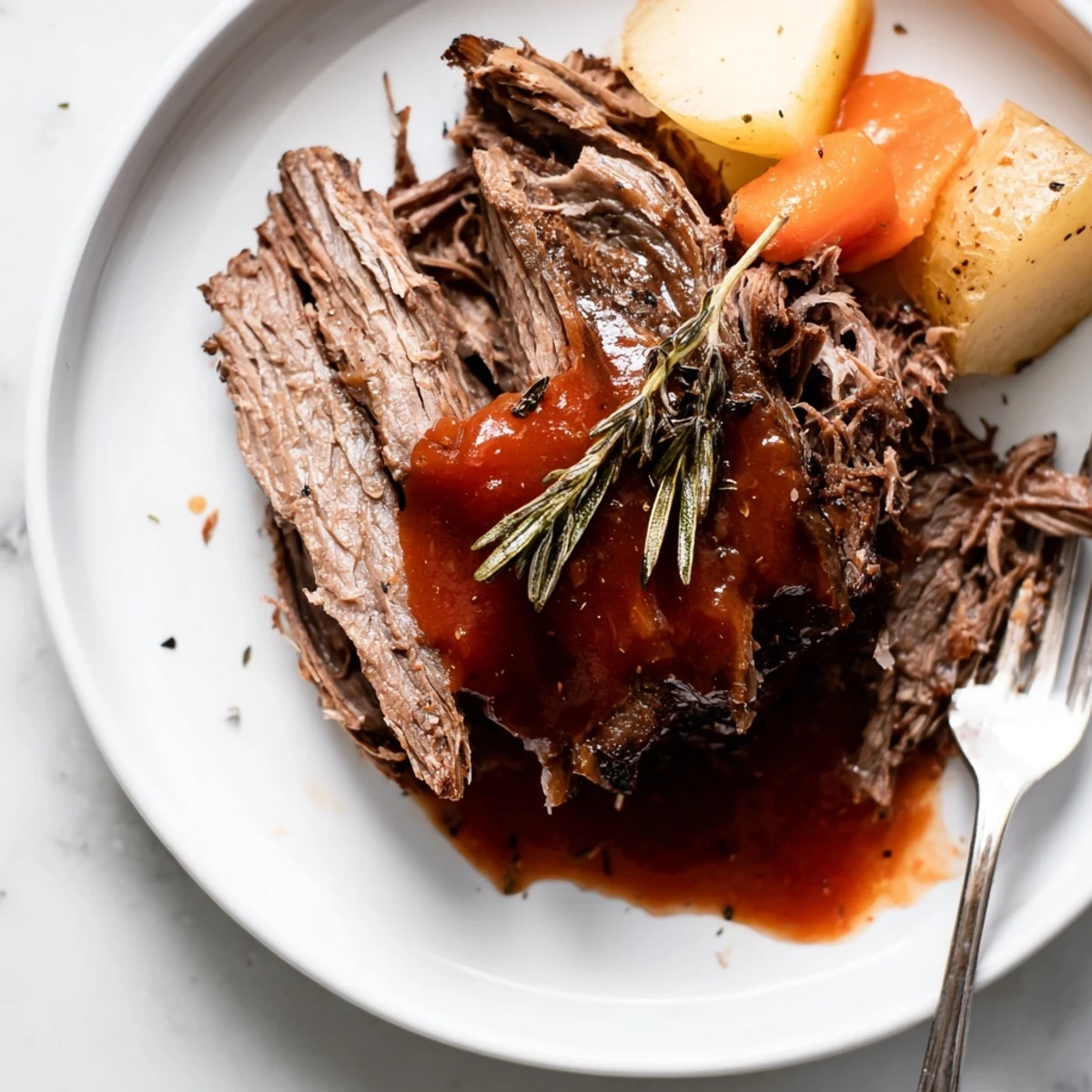 Save to Pinterest
 Some meals fill your stomach and some fill your whole house with warmth, and this pot roast does both without asking for much more than time and patience. Let the oven do the work, open a bottle of wine, and trust that the kitchen will take care of the rest.
Your Recipe Questions Answered
- → What cut of beef works best for pot roast?
-
Beef chuck roast is the ideal choice. Its generous marbling and connective tissue break down during slow cooking, yielding incredibly tender, flavorful meat. Avoid lean cuts like sirloin or round, which can dry out during the long braise.
- → Can I make pot roast without red wine?
-
Absolutely. Simply replace the wine with an equal amount of additional beef broth. The acidity and depth wine contributes are nice but not essential. You could also substitute with a splash of balsamic vinegar or apple cider vinegar mixed into the broth for a hint of brightness.
- → Why do I need to sear the roast before braising?
-
Searing builds a deep browned crust through the Maillard reaction, which adds layers of savory flavor that permeate the entire dish. It also creates fond — those caramelized bits stuck to the pot — that dissolve into the braising liquid and enrich the sauce.
- → How do I know when the pot roast is done?
-
The roast is ready when it's fork-tender, meaning a fork slides in and out with almost no resistance. This typically takes 2.5 to 3 hours at 325°F. You can also check for an internal temperature of around 200°F (93°C), which ensures the collagen has fully broken down.
- → Can I cook pot roast in a slow cooker instead of the oven?
-
Yes. After searing the meat and sautéing the aromatics on the stovetop, transfer everything to a slow cooker. Cook on low for 8 to 10 hours or on high for 5 to 6 hours. The texture will be similarly tender, though the sauce may be slightly thinner.
- → How should I store and reheat leftovers?
-
Store the beef and vegetables in an airtight container with the pan juices in the refrigerator for up to 4 days. Reheat gently in a covered pot over low heat on the stove, adding a splash of broth if needed. The flavors actually deepen overnight, making leftovers even more delicious.