
 Save to Pinterest
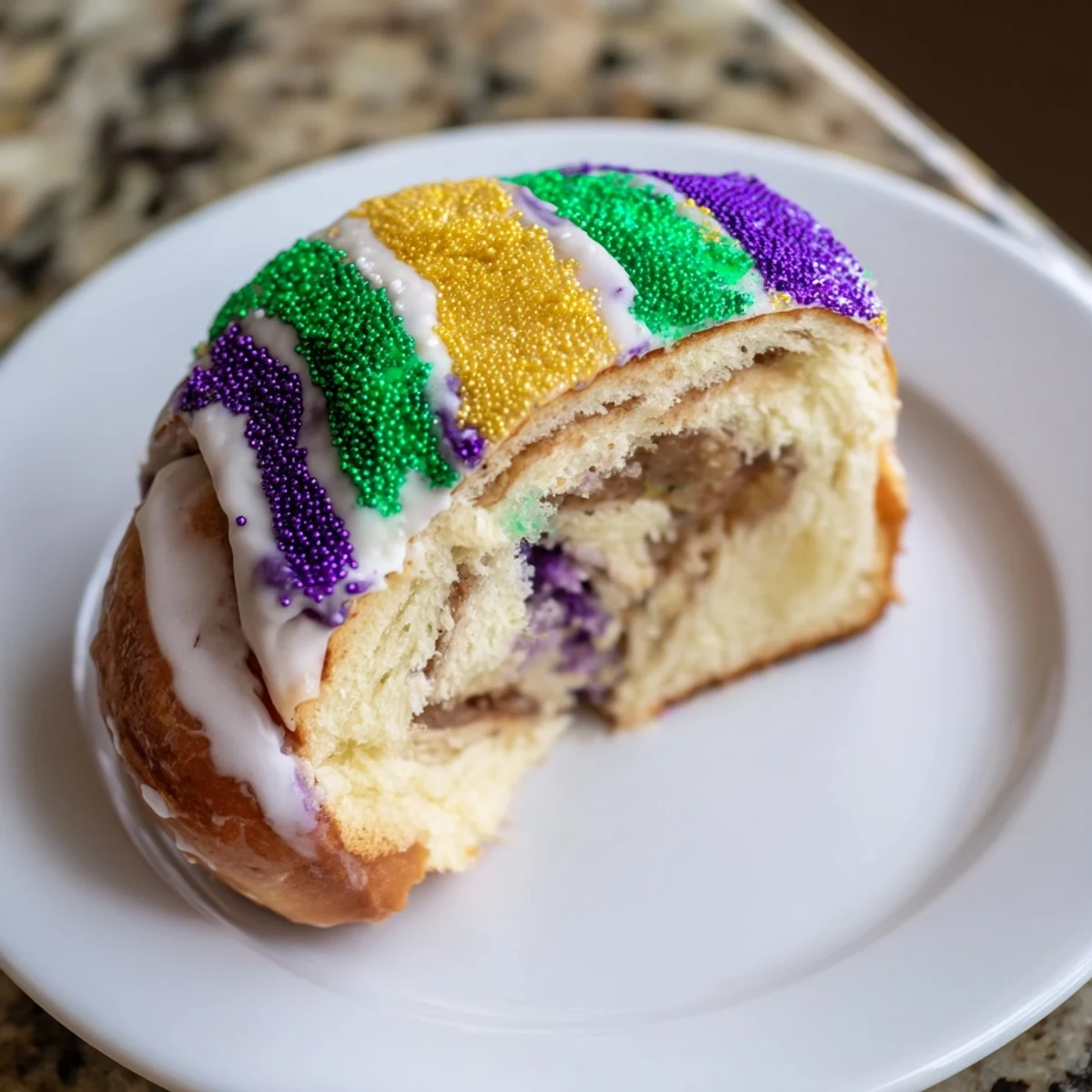
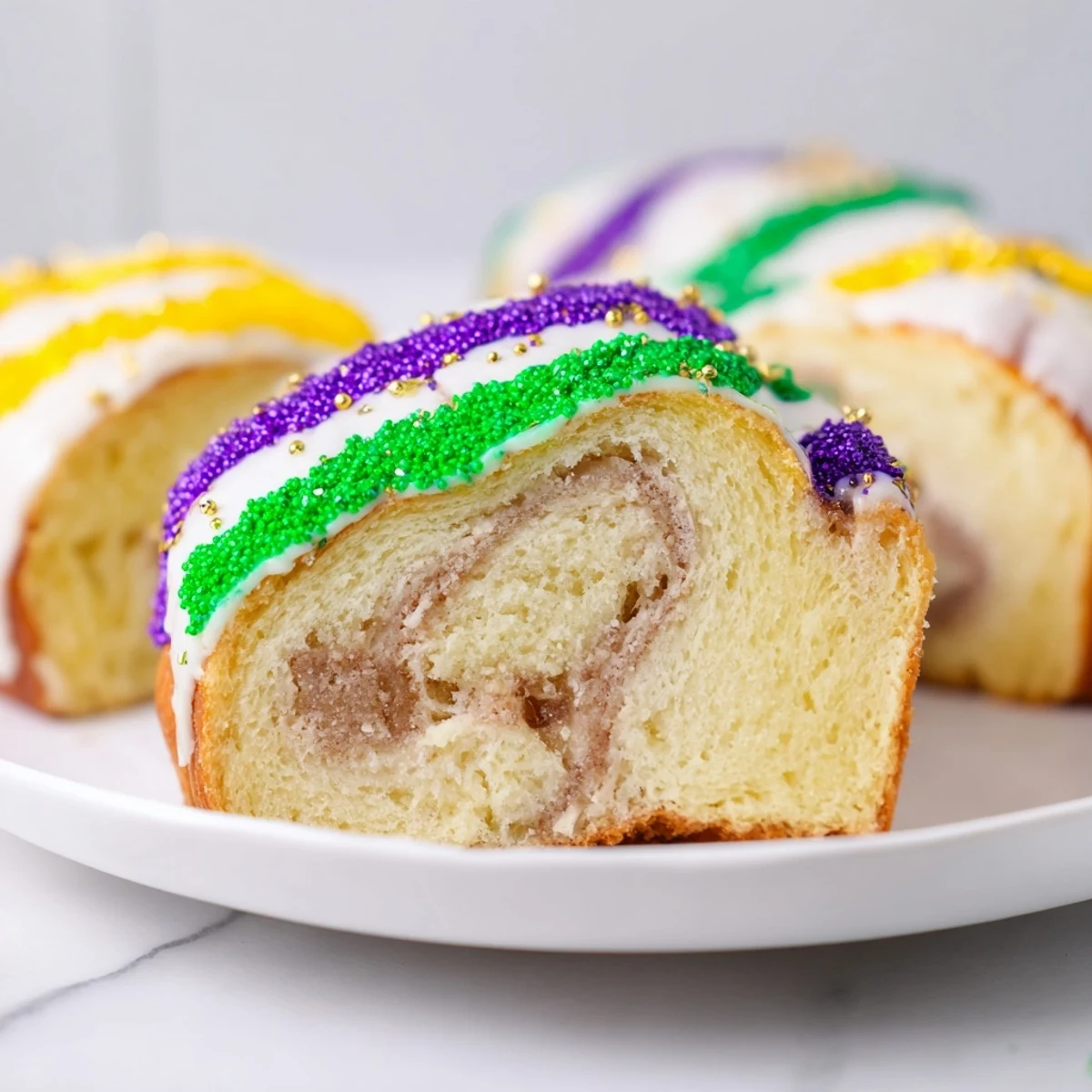
 This King Cake features a soft, buttery brioche dough filled with a sweet cinnamon-sugar mixture. The dough is kneaded until smooth, allowed to rise twice for a light, airy texture, then rolled, filled, and shaped into a ring. After baking to golden perfection, it’s drizzled with vanilla icing and sprinkled with festive purple, green, and gold sugars. Ideal for festive gatherings, this cake balances rich spices with tender crumb, bringing warmth and tradition to the table.
The first time I brought a King Cake to an office potluck, my coworkers looked at me like I'd brought a party to a Tuesday morning. By afternoon, three people were fighting over who got the slice with the plastic baby, and someone had already printed a calendar for next year's celebration. That's the thing about this cake—it doesn't just feed people, it makes them believe in luck.
Last February, my kitchen smelled like yeast and cinnamon for three straight weekends. I made six King Cakes before getting the shape right—the first one looked like a lopsided pretzel, and my husband just laughed and ate the ugly parts anyway. The fifth one, though—that one came out of the oven golden and perfect, and we stood over the counter picking at the warm edges until there was nothing left but crumbs and purple sugar everywhere.
Ingredients
- Whole milk warmed: The warmth activates your yeast properly—too hot and you kill it, too cold and nothing happens
- Unsalted butter melted: I learned the hard way that salted butter messes with the dough's fermentation timing
- Active dry yeast: If your yeast doesn't get foamy after five minutes, throw it out and start over
- Granulated sugar: This feeds the yeast but also keeps the brioche tender and sweet
- Large eggs room temperature: Cold eggs can shock your dough and slow down rising
- Pure vanilla extract: Don't even think about using the fake stuff—the difference is obvious here
- Salt: Just a half teaspoon balances all the sugar and brings out the buttery flavor
- Allpurpose flour: Bread flour works too, but regular flour gives you that classic soft pillowy texture
- Light brown sugar packed: The molasses in brown sugar creates this deep caramel flavor white sugar can't match
- Ground cinnamon: Use fresh cinnamon—old stuff tastes like dusty wood shavings
- Powdered sugar: Sift it first or you'll spend ten minutes fishing lumps out of your icing
- Sanding sugar in purple green and gold: Regular sugar disappears into the icing, but sanding sugar stays put and sparkles
Instructions
- Wake up the yeast:
- Combine your warm milk and melted butter first, then sprinkle the yeast on top like you're feeding a hungry pet. Let it sit until it's foamy and alive—this usually takes about five minutes, but I've learned to be patient because rushing this step ruins everything.
- Mix the base:
- Pour that foamy yeast mixture into your stand mixer with the sugar, eggs, vanilla, and salt. Mix it until everything's blended, then add the flour gradually while the mixer runs on low speed.
- Knead until smooth:
- The dough should feel slightly sticky but not messy—keep kneading for about eight minutes by hand or five with your dough hook. You'll know it's ready when it springs back when you poke it.
- First rise:
- Put the dough in a greased bowl, cover it with a towel, and find the warmest spot in your kitchen. Let it double in size, which takes anywhere from one to two hours depending on how cold your house is.
- Make the cinnamon filling:
- While the dough rises, mix the brown sugar, cinnamon, flour, and softened butter into a thick paste. I use my fingers—it's messy but lets me feel when all the sugar is dissolved into the butter.
- Roll and fill:
- Punch down that beautiful risen dough and roll it into a rectangle about ten by twenty inches. Spread the cinnamon filling everywhere except a half inch border around the edges.
- Form the ring:
- Roll the dough tight from the long side, pinch the seam shut, then connect the ends to make a ring. Pinch those ends together really well—I've had cakes bust open during baking because I got lazy here.
- Second rise:
- Set your ring on a parchment lined baking sheet, cover it loosely, and let it puff up for about forty five minutes. You'll know it's ready when you press it gently and the dough slowly springs back.
- Bake until golden:
- Slide it into a 350 degree oven for twenty five to thirty minutes. The kitchen will smell incredible—that's how you know it's getting close to done. Let it cool completely before adding icing or it'll just melt right off.
- Ice and decorate:
- Whisk the powdered sugar with milk and vanilla until it's smooth and pourable, then drizzle it over the cooled cake. Working quickly, sprinkle your colored sugars in alternating stripes while the icing's still wet.
- Add the baby:
- If you're using the plastic baby, push it into the underside of the cooled cake from underneath. This way nobody knows where it is until they're eating, and you don't accidentally bake it into the dough.
 Save to Pinterest
 My sister's birthday falls right before Mardi Gras, so one year I surprised her with a King Cake instead of a regular birthday cake. She was confused at first, but then she took a bite and got the baby in her slice. We joked it meant she'd have good luck all year—she still talks about that cake six years later.
The Secret To Perfect Ring Shape
After watching so many of my King Cakes morph into oval blobs during baking, I started wrapping the outside of the ring with a strip of parchment paper. It's like a little collar that holds the shape while the dough sets in the oven. The result is a perfect circle every time.
Making It Ahead
You can actually make the dough the night before and let it do its first rise in the refrigerator. The cold slows down the yeast but develops so much flavor—overnight brioche tastes exponentially better than same day dough. Just let it come to room temperature for thirty minutes before rolling.
Getting Those Bold Colors
I used to struggle with the sanding sugar looking dull and faded. Then I discovered that painting stripes of corn syrup on the icing before sprinkling the sugar makes the colors pop like crazy. The sugar sticks perfectly and the colors stay vibrant instead of looking washed out.
- Work quickly when adding the sugars—the icing starts setting within minutes
- Use separate spoons for each color so you don't accidentally mix your purple and gold
- If you run out of sanding sugar, regular colored sugar works but it's less dramatic
 Save to Pinterest
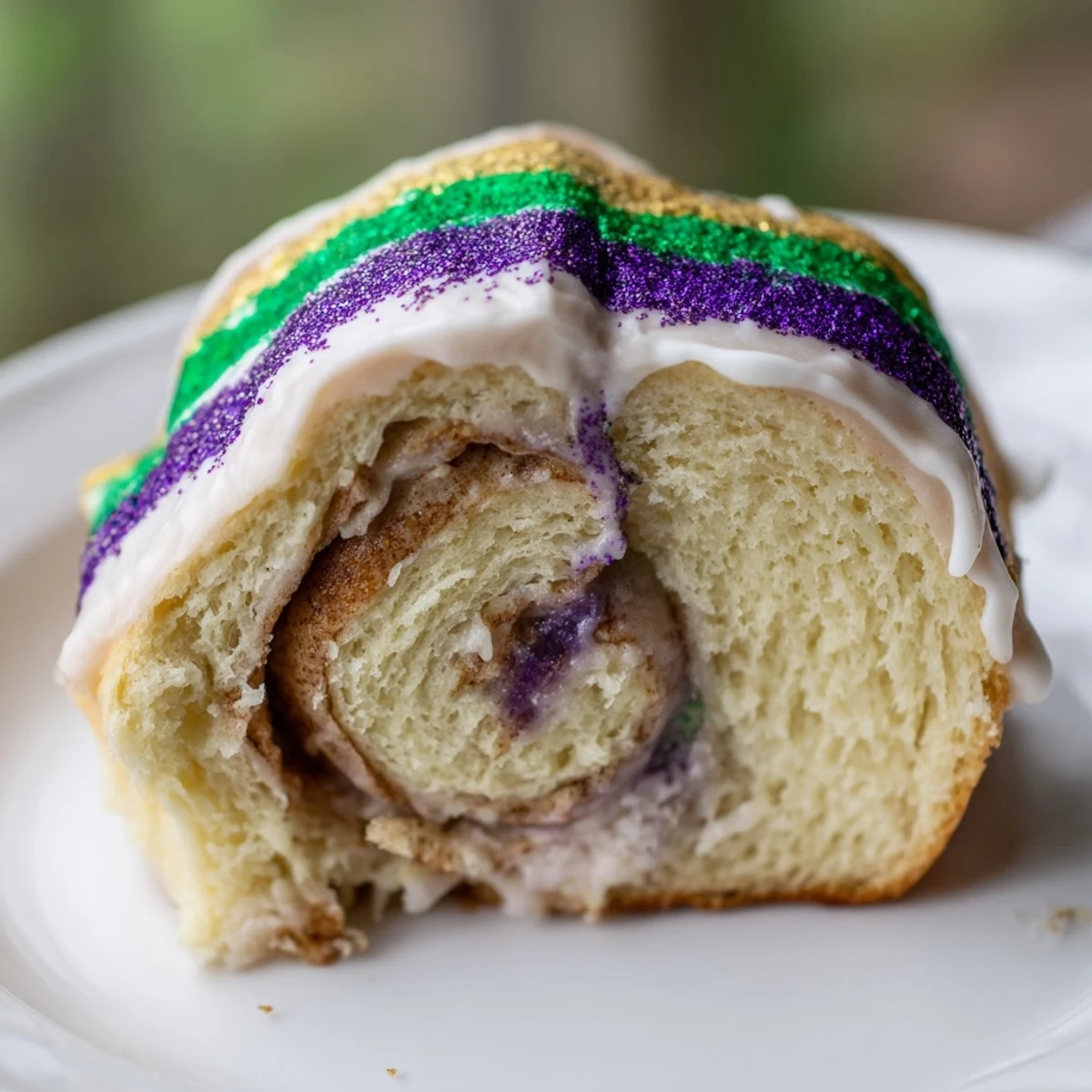
 There's something magical about cutting into this cake and watching everyone lean in, wondering who'll get the baby. It turns dessert into a game, and food into a celebration, and really, isn't that what cooking's all about?
Your Recipe Questions Answered
- → What type of flour works best for this cake?
-
All-purpose flour is recommended for a tender crumb, but bread flour can be used to achieve a chewier texture.
- → How do I ensure the dough rises properly?
-
Use warm milk and active dry yeast, letting the yeast foam before mixing. Allow the dough to rise in a warm, draft-free spot until doubled, which typically takes 1 to 1½ hours.
- → Can I add a cream cheese layer to the filling?
-
Yes, spreading a thin layer of softened cream cheese under the cinnamon filling adds richness and tang to the swirl.
- → What is the purpose of the colored sanding sugars?
-
They add vibrant traditional Mardi Gras colors—purple, green, and gold—bringing festive visual appeal and a slight crunch to the top layer.
- → How should the cake be stored?
-
Store in an airtight container at room temperature for up to two days, or refrigerate for longer freshness. Bring back to room temperature before serving.
- → Is there a traditional decoration included?
-
An optional plastic baby figurine can be hidden inside, honoring the classic Mardi Gras tradition.