
 Save to Pinterest
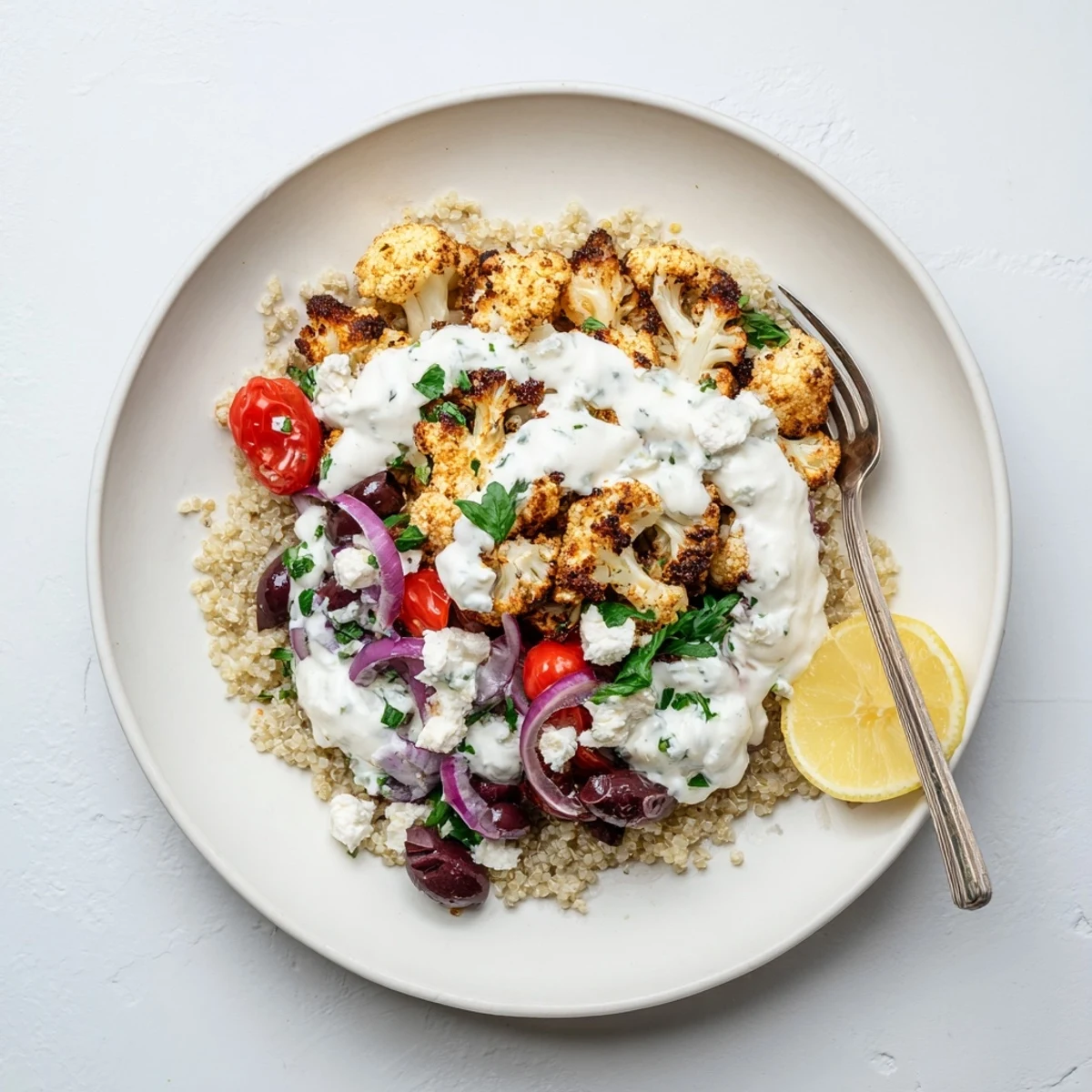
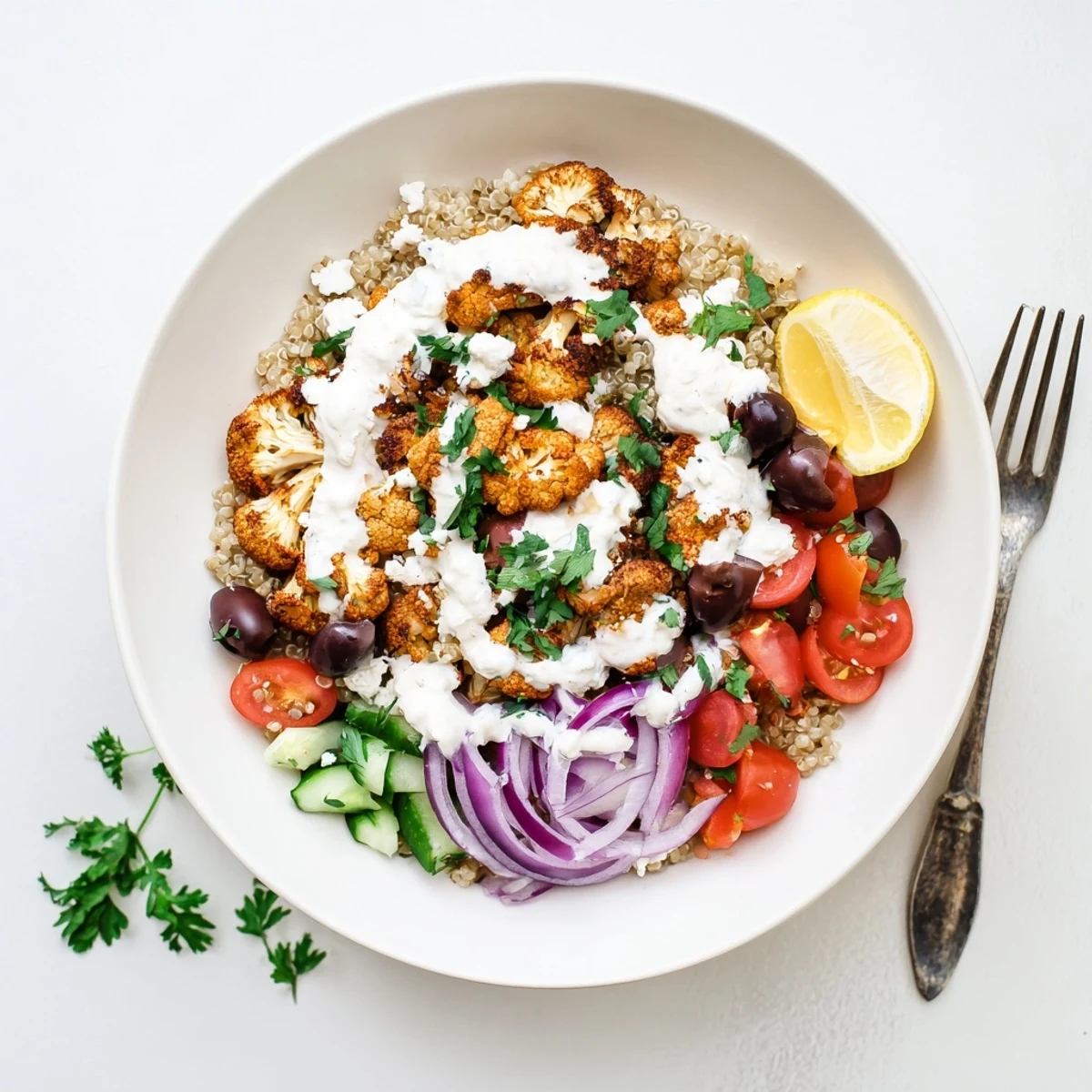
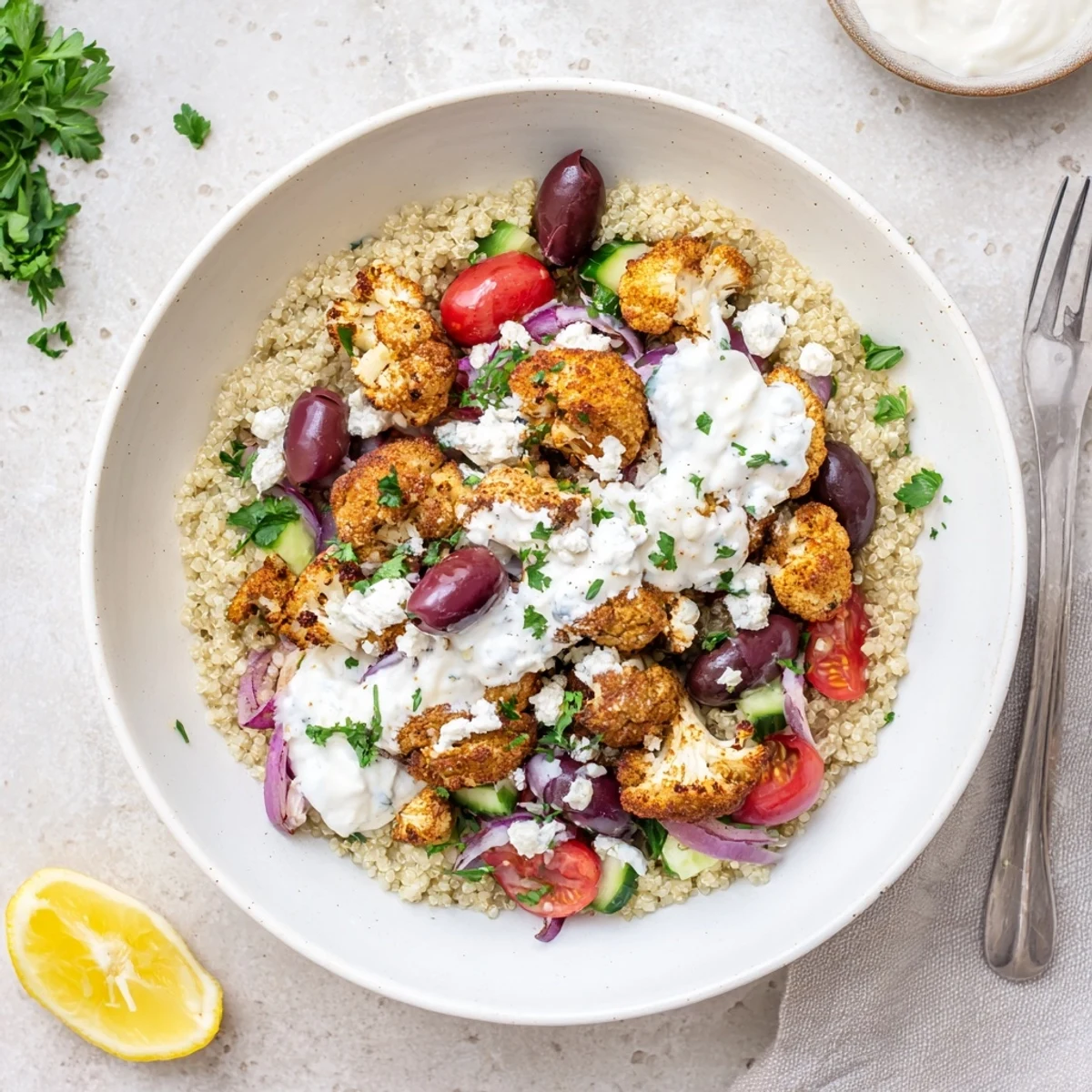
 This Greek cauliflower bowl brings together oven-roasted florets seasoned with smoked paprika, oregano, and cumin alongside fluffy quinoa, juicy cherry tomatoes, crisp cucumber, and briny Kalamata olives.
Everything gets finished with tangy crumbled feta and a cool, garlicky tzatziki sauce made from Greek yogurt and fresh dill.
It's a complete vegetarian and gluten-free meal that's easy enough for weeknights yet colorful enough for entertaining.
The smell of smoked paprika hitting a hot oven sheet is one of those small kitchen joys that makes you stop and inhale. My neighbor actually knocked on my door once asking what was baking because the scent had drifted down the hallway. That particular afternoon I was cobbling together a Greek inspired bowl from whatever lingered in the crisper drawer, and it turned into something I now crave at least twice a month. Cauliflower, when treated with the right spices and enough oven time, becomes almost unrecognizable from its raw, pale self.
I served this to my sister on a rainy Sunday when she claimed she was too tired to eat properly and was about to order takeout. She went back for a second bowl and now texts me for the recipe every few weeks. There is something about a colorful bowl filled with Mediterranean flavors that makes eating well feel like a treat rather than a chore.
Ingredients
- Cauliflower (1 large head): The star of the bowl, cut into florets that are small enough to get nicely caramelized edges in the oven.
- Olive oil (2 tbsp): Helps the spices stick and ensures the cauliflower roasts instead of steaming.
- Smoked paprika (1 tsp): This is what gives the cauliflower its deeply savory, almost meaty character.
- Dried oregano (1 tsp): A backbone herb in Greek cooking, it ties the roasted vegetables to the Mediterranean profile.
- Ground cumin (1/2 tsp): Just a whisper of warmth that rounds out the spice blend without overpowering it.
- Salt and pepper: Season generously because cauliflower absorbs flavor like a sponge.
- Cooked quinoa or brown rice (1 cup): The hearty base that makes this a filling meal rather than a side salad.
- Cherry tomatoes (1 cup, halved): They add a burst of sweetness and acidity that balances the rich, roasted elements.
- Cucumber (1 cup, diced): Fresh crunch that lightens every bite and echoes the cucumber in the tzatziki.
- Kalamata olives (1/3 cup, pitted and halved): Briny little gems that deliver a salty punch exactly where you need it.
- Red onion (1/2, finely sliced): Provides a sharp, crisp contrast to the softer textures in the bowl.
- Feta cheese (1/2 cup, crumbled): Creamy, tangy, and essential for that unmistakable Greek personality.
- Fresh parsley (2 tbsp, chopped): A bright finishing herb that makes the whole bowl taste fresher.
- Lemon wedges: A final squeeze over everything ties all the flavors together beautifully.
- Greek yogurt (1 cup): The thick, tangy foundation of a proper tzatziki sauce.
- Cucumber for tzatziki (1/2 cup, grated and squeezed dry): Grating and squeezing is crucial here because excess water will make the sauce runny.
- Garlic (1 clove, minced): One clove is enough to perfume the entire sauce without overwhelming it.
- Fresh dill (1 tbsp, chopped): The defining herb in tzatziki, so please use fresh if you can find it.
- Lemon juice (1 tbsp): Brightens the yogurt and brings out the dill.
Instructions
- Fire up the oven:
- Preheat to 425 degrees F and make sure the rack is in the center position so the cauliflower roasts evenly on all sides.
- Spice and toss the cauliflower:
- Pile the florets on your baking sheet, drizzle with olive oil, sprinkle on the paprika, oregano, cumin, salt, and pepper, then toss with your hands until every piece is coated. Spread them out so they are not crowded, or they will steam instead of roast.
- Roast until golden:
- Slide the pan in and set a timer for 25 minutes, flipping the florets halfway through so they brown on multiple sides. You want deeply golden edges and a tender interior when pierced with a fork.
- Whip up the tzatziki:
- While the cauliflower works its magic, grate the cucumber and squeeze it hard in a clean towel to remove as much moisture as possible. Stir it into the yogurt with the garlic, dill, lemon juice, salt, and pepper, then pop it in the fridge so the flavors meld.
- Build your bowls:
- Divide the quinoa or rice among four bowls and arrange the roasted cauliflower, tomatoes, cucumber, olives, red onion, and feta on top in sections so it looks as good as it tastes.
- Finish and serve:
- Spoon a generous dollop of tzatziki over each bowl, scatter with parsley, tuck a lemon wedge alongside, and serve right away while the cauliflower is still warm.
 Save to Pinterest
 There was a Tuesday when I ate this bowl standing at the kitchen counter, still in my coat, because I could not wait to sit down. The warmth of the cauliflower against the cold tzatziki and crisp vegetables is a contrast that makes every forkful interesting.
Making It Your Own
Swap the quinoa for farro if you want something chewier, or skip the grain entirely and double the cauliflower for a lighter meal. Crumbled chickpeas roasted alongside the cauliflower add a wonderful nuttiness and extra protein without any extra effort. The bowl is forgiving, so treat it as a template and raid your fridge with confidence.
Getting Ahead of the Rush
The tzatziki actually tastes better on the second day once the garlic and dill have had time to mingle, so making it a day ahead is a smart move. You can also roast the cauliflower in advance and reheat it gently in a skillet to bring back some of those crispy edges. Cook your grain of choice over the weekend and keep it in the fridge so weeknight assembly takes about ten minutes.
A Few Things Worth Remembering
This bowl travels remarkably well if you keep the tzatziki in a separate container until you are ready to eat. I have packed it for lunches that made coworkers jealous and even served it at a casual backyard gathering where people went back for thirds.
- Taste your feta before adding salt to the bowl because some brands are significantly saltier than others.
- A drizzle of good olive oil over the finished bowl adds a velvety richness that ties everything together.
- Always serve with the lemon wedge because that final squeeze of acid makes every ingredient sing.
 Save to Pinterest
 This bowl is proof that simple ingredients treated with care can rival anything from a restaurant. Make it once and it will become part of your regular rotation without even trying.
Your Recipe Questions Answered
- → Can I make the tzatziki sauce ahead of time?
-
Yes, tzatziki actually improves with time as the flavors meld together. You can prepare it up to 2 days in advance and store it covered in the refrigerator. Just give it a quick stir before serving.
- → What can I substitute for quinoa in this bowl?
-
Brown rice works perfectly as a direct swap, but you could also use couscous, farro, or even cauliflower rice to keep the carb count lower. Each option brings a slightly different texture to the bowl.
- → How do I get the best roast on the cauliflower?
-
Make sure your oven is fully preheated to 425°F and avoid overcrowding the baking sheet. Spacing the florets out allows them to caramelize rather than steam. Flipping them once halfway through ensures even browning on all sides.
- → Is this bowl served warm or cold?
-
The roasted cauliflower and grains are best served warm, while the fresh vegetables and tzatziki are cool. This contrast of temperatures is part of what makes the bowl so satisfying. Assemble it just before eating for the ideal balance.
- → How long do leftovers keep in the fridge?
-
Store each component separately in airtight containers and the roasted cauliflower, grains, and chopped vegetables will stay fresh for up to 3 days. The tzatziki keeps well for about 4 days. Reassemble when ready to eat.
- → Can I add protein to make this more filling?
-
Absolutely. Grilled chicken breast, roasted chickpeas, or pan-seared halloumi all pair beautifully with the Mediterranean flavors. For a plant-based option, a handful of toasted pine nuts or hemp seeds adds both protein and crunch.