
 Save to Pinterest
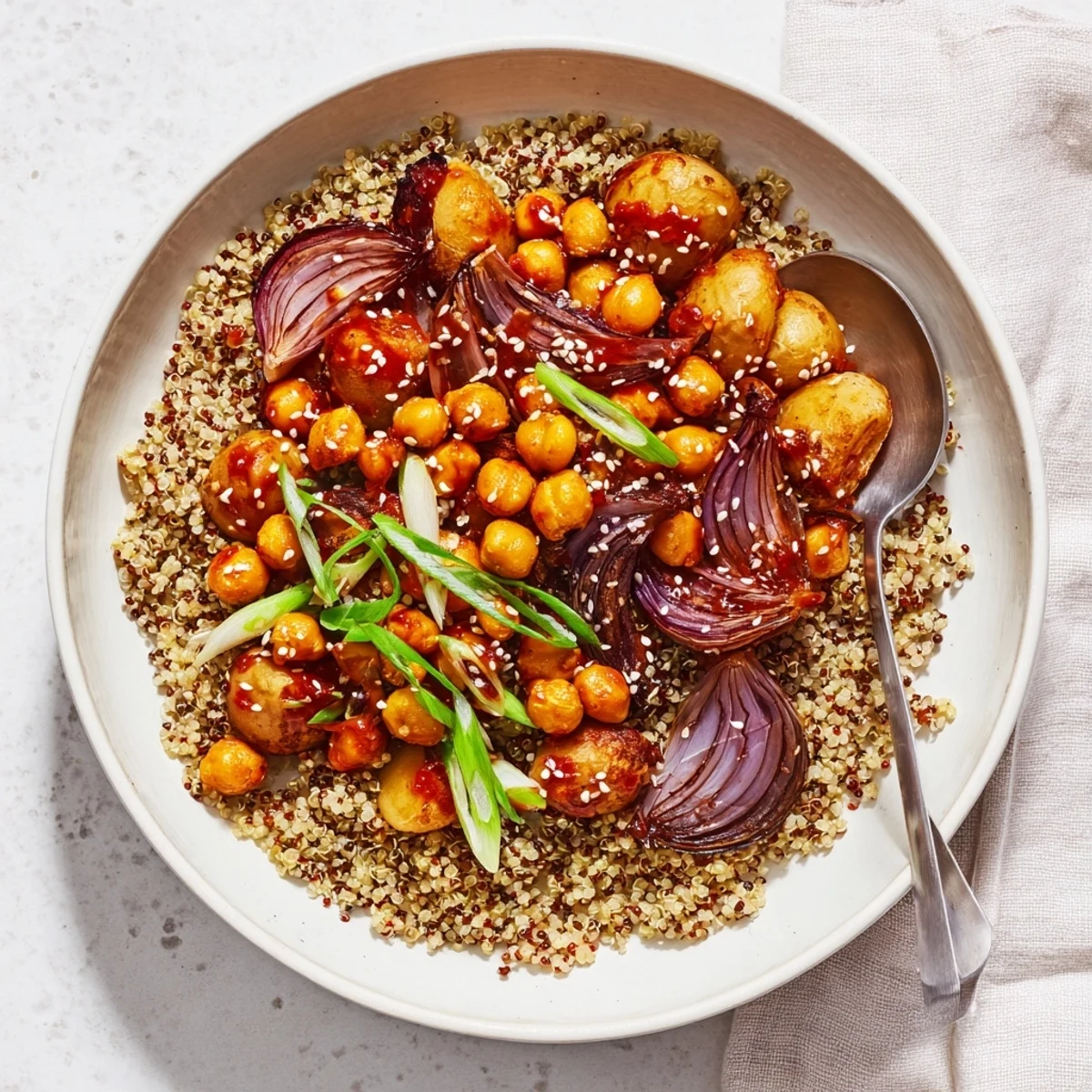
 This Korean-inspired bowl combines roasted baby potatoes and crispy chickpeas coated in a homemade spicy gochujang glaze. The hearty mixture sits atop fluffy quinoa, creating a well-balanced meal with complex flavors. Ready in under an hour, this vibrant dish delivers satisfying protein and fiber while the sweet-and-spicy sauce adds depth to every bite. Perfect for meal prep or weeknight dinners.
The first time gochujang entered my kitchen, I was skeptical about that deep red paste staring back from its tub. But one spoonful changed everything — the fermentation, the slight sweetness, the way it hugs ingredients instead of just coating them. This bowl emerged from a Tuesday night when I needed something substantial but didnt want to spend hours at the stove.
I served this to my sister who swore she hated chickpeas, and she asked for seconds before even finishing her first bowl. The way the crispy edges of the potatoes catch that spicy glaze creates these incredible little moments of texture contrast.
Ingredients
- Baby potatoes (500 g): Halving them creates more surface area for caramelization — dont overcrowd the pan or theyll steam instead of roast
- Chickpeas (400 g can): Rinse thoroughly and pat them dry if you have time — extra crispy chickpeas are worth the effort
- Red onion: The sweetness balances the heat beautifully, slice it thin so it softens quickly in the skillet
- Gochujang (3 tbsp): This fermented chili paste is the soul of the dish — different brands vary in heat, so taste yours first
- Soy sauce (2 tbsp): Use tamari if you need this gluten-free, it adds that essential umami depth
- Sesame oil (1 tbsp): Toasted sesame oil has a much more intense flavor than regular — a little goes a long way
- Maple syrup (1 tbsp): Just enough to mellow the heat and help the sauce cling to everything
- Quinoa (200 g): Rinse until the water runs clear or youll end up with bitter, soapy tasting grains
Instructions
- Get everything roasting:
- Preheat your oven to 220°C (425°F) and line a baking tray while you halve those baby potatoes. Toss them with the drained chickpeas, olive oil, salt, pepper, and garlic until everything is evenly coated. Spread them out so they have room to breathe — crowded trays make for soggy potatoes. Roast for 25–30 minutes, but remember to stir halfway through so nothing sticks or burns.
- Cook the quinoa:
- Combine your rinsed quinoa with 2 cups (480 ml) water in a saucepan and bring it to a rolling boil. Drop the heat to low, cover tight, and let it simmer gently for about 15 minutes until all the water disappears. Turn off the heat but leave the lid on — this resting period is crucial for perfectly fluffy grains. Fluff with a fork when ready.
- Whisk the sauce:
- In a small bowl, combine gochujang, soy sauce, sesame oil, rice vinegar, maple syrup, and water. Whisk until completely smooth — the consistency should be like thick salad dressing, not pouring cream. If it feels too thick, add another splash of water.
- Bring it all together:
- Heat your largest skillet over medium heat and toss in the sliced red onion. Let it soften for 2–3 minutes until it starts to become fragrant. Add those roasted potatoes and chickpeas directly to the pan, then pour in your sauce. Toss everything gently but thoroughly until each piece is glossy and coated. Cook just 2–3 more minutes until the sauce bubbles and thickens slightly, clinging to everything like a glaze.
- Assemble your bowls:
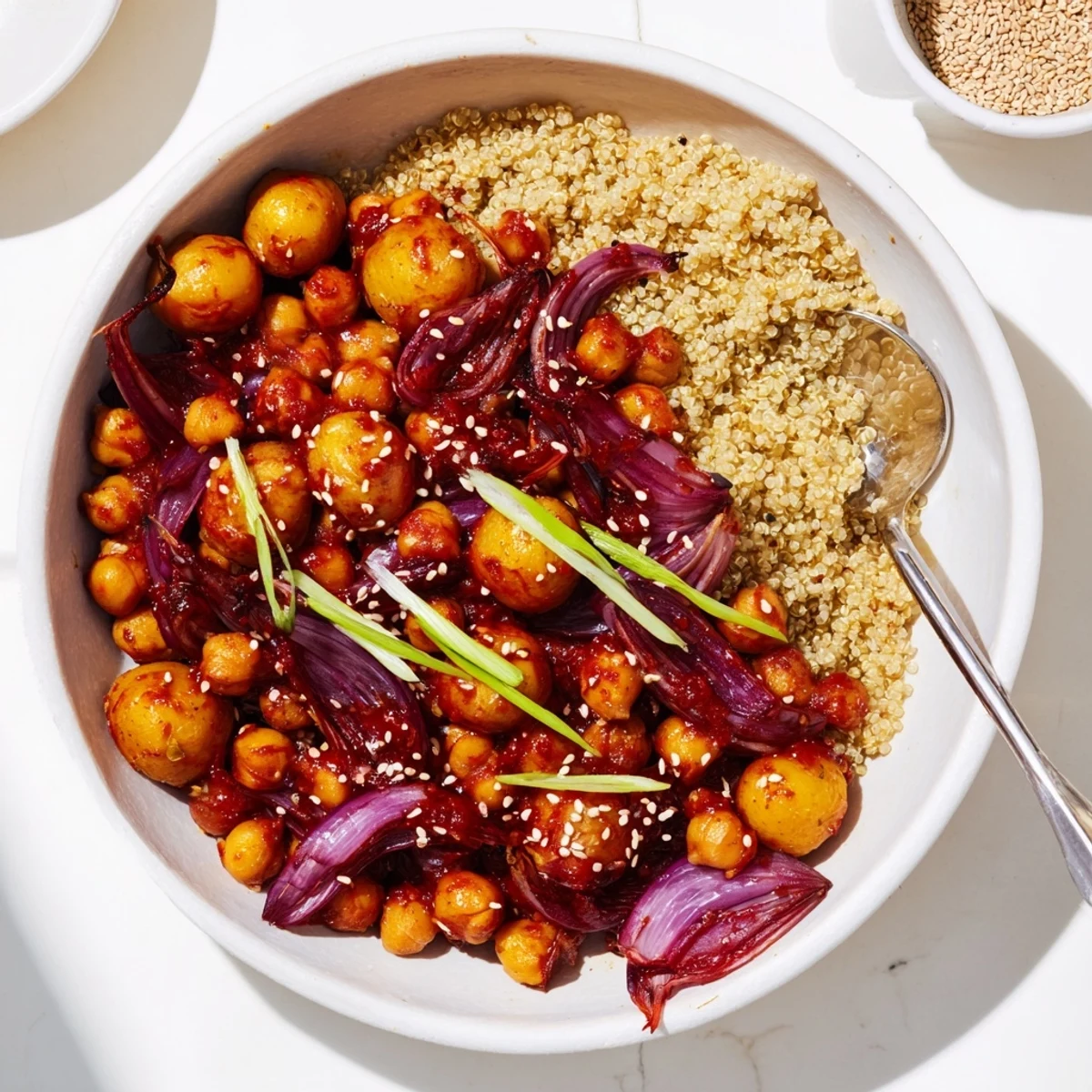
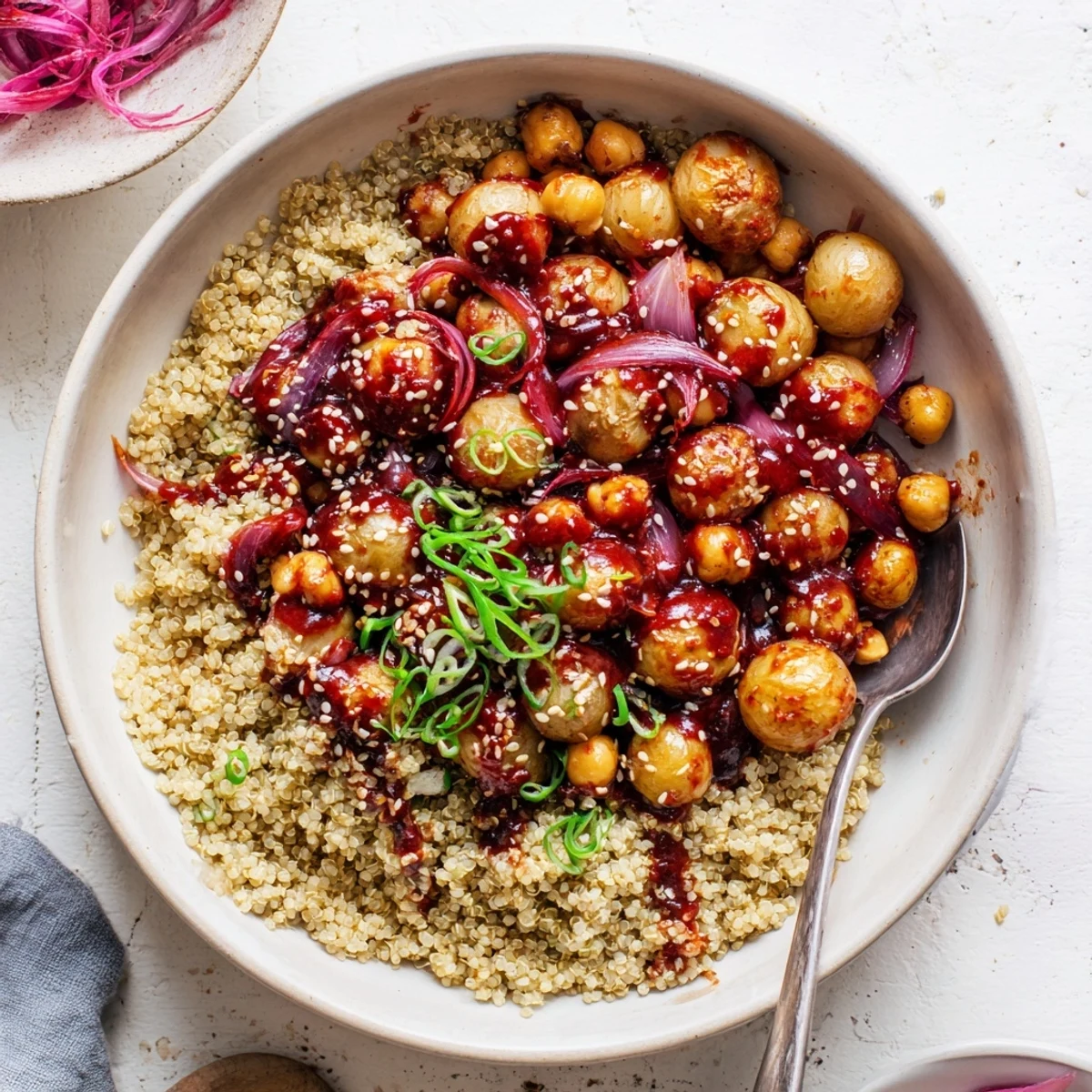
- Scoop a bed of fluffy quinoa into each bowl and heap that spicy, saucy potato and chickpea mixture on top. Sprinkle generously with toasted sesame seeds and fresh spring onions. Serve immediately while the contrast between hot, glazed potatoes and cool, fresh onions is at its peak.
 Save to Pinterest
 This recipe became my go-to for weeknight dinners when I want something that feels special but doesnt require any fancy techniques. The way the kitchen smells when the gochujang hits the hot pan is absolutely intoxicating.
Making It Your Own
Ive discovered that steamed broccoli or spinach added at the very end turns this into a complete one-bowl meal without any extra effort. The greens absorb just enough sauce to stay vibrant but still taste fresh.
The Crunch Factor
Sometimes I sprinkle chopped roasted peanuts or cashews over the top right before serving. That extra crunch plays so nicely against the soft potatoes and creamy chickpeas, plus it adds protein.
Batch Cooking Wisdom
This recipe doubles beautifully and the components keep well for days, which is why it earned a permanent spot in my Sunday meal prep rotation. The sauce actually develops more depth overnight.
- Cool the roasted mixture completely before storing to prevent sogginess
- Keep the sauce separate if meal prepping more than 2 days ahead
- Reheat gently with a splash of water to revive the glaze
 Save to Pinterest
 Hope this bowl brings as much warmth to your table as it has to mine. Happy cooking.
Your Recipe Questions Answered
- → What does gochujang taste like?
-
Gochujang is a Korean fermented chili paste with a complex flavor profile combining sweet, savory, and spicy notes. It has a rich umami taste similar to miso but with added heat and subtle sweetness from the fermentation process.
- → Can I make this dish less spicy?
-
Absolutely. Simply reduce the amount of gochujang in the sauce or add extra maple syrup to balance the heat. You can also substitute half the gochujang with tomato paste or mild red pepper paste for a milder version.
- → What protein alternatives work well?
-
Crispy tofu cubes, roasted tempeh, or edamame would complement the gochujang sauce beautifully. For non-vegan options, shredded chicken or pan-seared shrimp would also pair nicely with the Korean-inspired flavors.
- → How do I store leftovers?
-
Keep components separate in airtight containers for up to 4 days. Store the glazed potatoes and chickpeas separately from the quinoa to maintain texture. Reheat in a skillet over medium heat, adding a splash of water if needed to refresh the sauce.
- → Can I use other grains instead of quinoa?
-
Brown rice, farro, or bulgur would work wonderfully as alternatives. Cook your chosen grain according to package instructions and adjust cooking time accordingly. Each grain brings a slightly different texture to the bowl.
- → Is gochujang gluten-free?
-
Traditional gochujang may contain wheat, but many brands now offer gluten-free versions. Always check the label to be certain. For this dish, use tamari instead of soy sauce and ensure your gochujang is certified gluten-free if needed.