
 Save to Pinterest
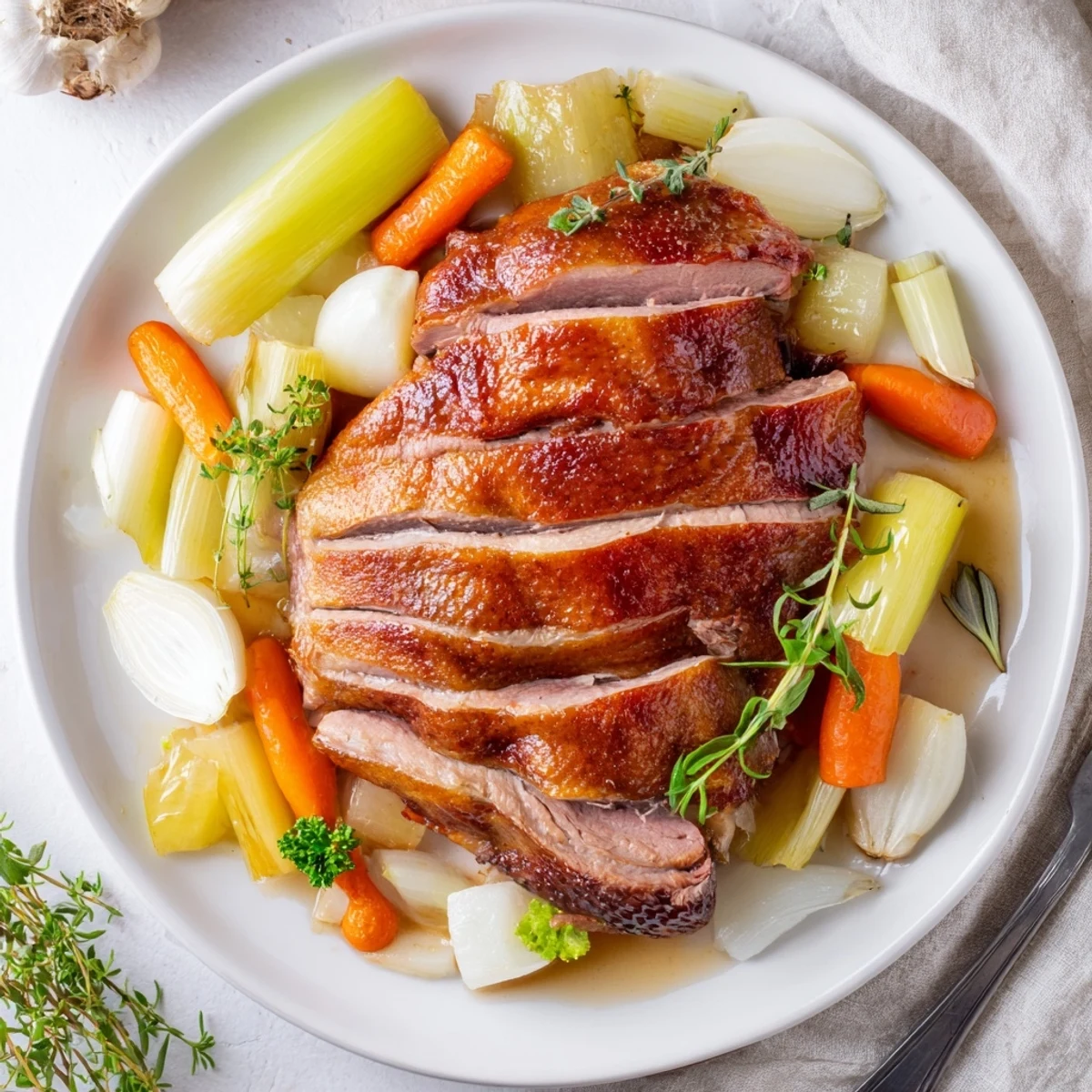
 This dish starts by seasoning and searing a whole duck until the skin crisps, then the bird nests atop browned carrots, parsnips, leeks and garlic. White wine and stock build a fragrant braising liquid with thyme and rosemary; a long slow braise renders the meat tender while vegetables absorb flavor. A final high-heat roast crisps the skin; rest before carving and serve with the glossy cooking juices.
The sizzle of duck fat hitting a hot Dutch oven is one of those sounds that makes everyone in the house wander into the kitchen asking what is for dinner. My neighbor Claire once knocked on my door during a snowstorm just to find out what smelled so good it was drifting through the shared wall. That evening turned into an impromptu dinner party, with four of us huddled around the table picking every last piece of crispy skin off this braised duck.
I learned the hard way that patience during the searing step is nonnegotiable. The first time I rushed it, the skin never fully crisped up during the braise, and I ended up with something more soggy than spectacular.
Ingredients
- Whole duck (about 4 to 5 lbs), trimmed of excess fat: A good quality duck makes all the difference, and trimming the fat prevents the braising liquid from becoming greasy.
- Kosher salt and freshly ground black pepper: Season generously, as duck can handle more salt than you might expect.
- Carrots, parsnips, leeks, onion, celery, and garlic: This combination creates a sweet, earthy bed that absorbs the duck juices and turns into something almost better than the meat itself.
- Olive oil: Just enough to get the sear started before the duck renders its own fat.
- Dry white wine: A Chenin Blanc from the Loire Valley is my go to, as its acidity cuts through the richness beautifully.
- Low sodium chicken stock: You want to control the salt level, so low sodium is the way to go.
- Fresh thyme, rosemary, and a bay leaf: Fresh herbs here matter more than in most recipes because they infuse the braising liquid slowly over two hours.
- Fresh parsley, chopped (optional): A bright finish that lifts the whole dish right before serving.
Instructions
- Crank the oven warm:
- Preheat to 350 degrees Fahrenheit so it is fully heated by the time your duck is ready to braise.
- Dry and season the duck:
- Pat the duck thoroughly with paper towels until the skin feels tacky but not damp, then season inside and out with salt and pepper.
- Get the pot screaming hot:
- Heat olive oil in a large Dutch oven over medium high heat until you see the first wisp of smoke, which tells you the pot is ready for a proper sear.
- Sear until golden:
- Place the duck breast side down and let it cook undisturbed for 5 to 7 minutes until the skin is deeply golden and crisp, then flip and brown the other side for another 5 minutes before removing.
- Drain the fat:
- Pour off all but about two tablespoons of the rendered duck fat, which is liquid gold you should save in a jar for roasting potatoes later.
- Build the vegetable bed:
- Toss in all the chopped vegetables and smashed garlic, sauteing for 7 to 8 minutes until they pick up some color and start to smell sweet.
- Deglaze with wine:
- Pour in the white wine and scrape up every browned bit from the bottom of the pot, letting the wine reduce by half so the alcohol cooks off.
- Nestle and braise:
- Set the duck on top of the vegetables, pour in the stock, tuck in the herbs, cover tightly, and slide it into the oven for 1 and a half hours, basting once halfway through.
- Crisp the finish:
- Remove the lid, crank the oven to 425 degrees Fahrenheit, and roast uncovered for 20 minutes until the skin blisters and turns deeply bronzed.
- Rest and serve:
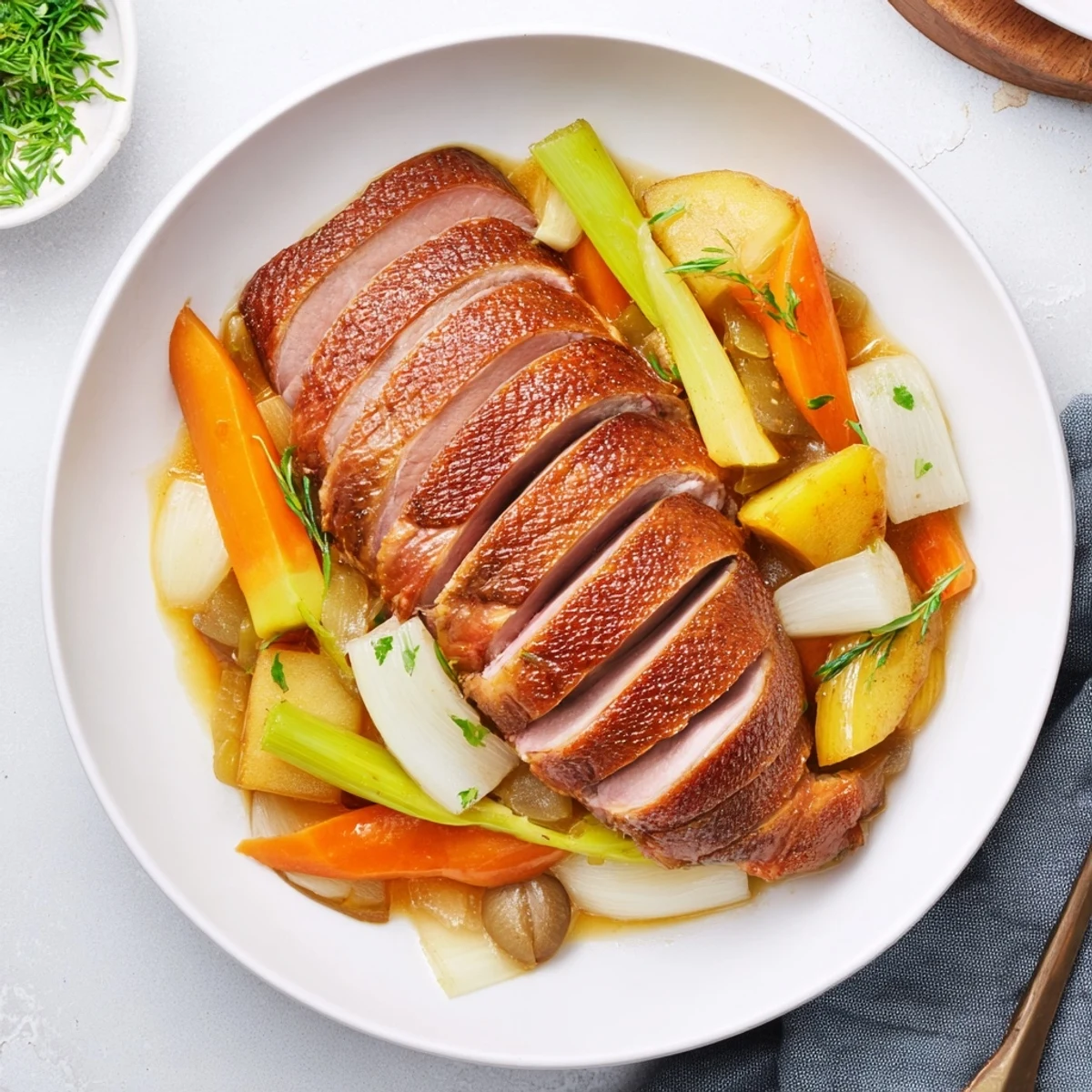
- Let the duck rest for 10 minutes before carving, then serve over the braised vegetables with a ladle of the cooking juices and a shower of fresh parsley.
 Save to Pinterest
 That snowstorm dinner with Claire turned into a standing monthly tradition, and this duck is always the first thing she requests when the weather turns cold.
Pairing This With the Right Wine
A chilled Chenin Blanc has enough body to stand up to the richness while its natural acidity keeps each bite feeling fresh. If you prefer red, a light Pinot Noir works beautifully without overwhelming the delicate duck flavor.
Swapping the Vegetables
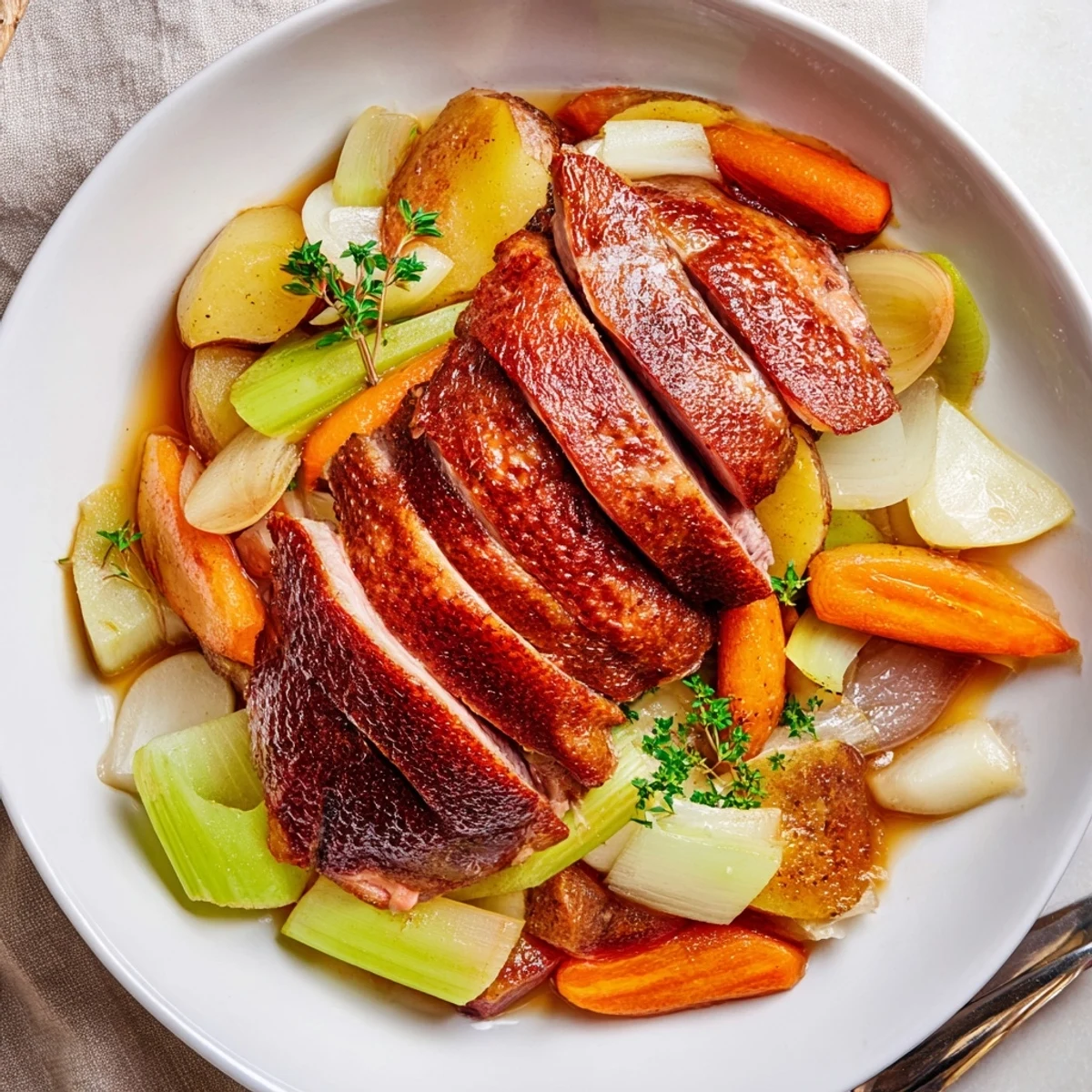
Turnips, baby potatoes, or even cubed butternut squash can replace any of the root vegetables listed here. Just keep the pieces roughly the same size so everything finishes cooking at the same time.
Storage and Leftovers
The leftover duck shreds beautifully into a soup or a rich pasta sauce the next day, and the braised vegetables reheat like a dream.
- Store everything in the braising liquid to keep the meat moist.
- Leftover duck fat in the pot can be strained and refrigerated for up to a month.
- Always reheat gently over low heat so the skin stays somewhat crisp.
 Save to Pinterest
 This dish asks for a little patience and a lot of love, and it rewards you with a meal that turns an ordinary evening into something worth remembering.
Your Recipe Questions Answered
- → How do I get extra-crispy skin?
-
Pat the skin very dry and season well, then sear breast-side down to render fat. Finish uncovered at high heat to sharpen the crackle; parboiling briefly beforehand can help.
- → Should I remove all the rendered fat before braising?
-
Pour off most of the rendered fat but leave about 1–2 tablespoons to sauté the vegetables for added flavor. Reserve excess fat for roasting potatoes or confit techniques.
- → Which vegetables are best for braising with duck?
-
Root vegetables like carrots and parsnips, along with leeks, onion and celery, hold their shape and soak up braising juices. Turnips or potatoes are suitable swaps.
- → What liquids make the best braising base?
-
Dry white wine plus low-sodium stock gives brightness and depth; a light red wine such as Pinot Noir can be used for a richer, more robust finish.
- → How long should the duck rest before carving?
-
Allow the bird to rest 8–12 minutes after roasting so the juices redistribute. Resting makes carving neater and keeps the meat moist.
- → Any tips for aromatics inside the cavity?
-
Season the cavity and tuck in thyme and rosemary sprigs or a halved onion to infuse extra fragrance during the long braise.