
 Save to Pinterest
 Whisk eggs with salt and pepper, fold in cottage cheese and half the chives. Melt butter in a nonstick skillet over medium-low heat, pour in the mixture and stir gently, scraping the pan until curds form but remain creamy (2–3 minutes). Remove from heat early to finish cooking with residual heat. Finish with remaining chives. Variations: add spinach, smoked salmon, or substitute ricotta; serve with toasted sourdough.
The smell of butter hitting a hot pan on a lazy Sunday morning is something I never get tired of, but adding cottage cheese to my scrambled eggs changed everything about how I approach breakfast. My roommate stared at me like I had lost my mind when she saw me spooning it into the bowl, and honestly I half expected a disaster myself. One bite later she was asking for the recipe and I was trying to remember exactly how much I used.
I have served this to overnight guests, bleary eyed and clutching coffee mugs, and watched them go completely silent after the first forkful. That quiet is the highest compliment a breakfast cook can receive.
Ingredients
- 4 large eggs: Fresh eggs matter more here than in almost any other dish because the flavor is front and center.
- 1/2 cup cottage cheese: Full fat gives the richest texture but low fat works beautifully too, and the curds break down into the eggs as they cook.
- 1 tablespoon unsalted butter: This is your flavor base so do not skimp on it, and let it foam before adding the eggs.
- 2 tablespoons fresh chives: Their mild onion flavor cuts through the richness and adds a pop of green that makes the plate look intentional.
- 1/4 teaspoon salt: Cottage cheese already contains some sodium so taste before adding more at the end.
- 1/8 teaspoon black pepper: Freshly cracked is nonnegotiable here, the preground stuff tastes flat against the creamy eggs.
Instructions
- Whisk everything together:
- Crack the eggs into a medium bowl, add the salt and pepper, and whisk until the yolks and whites are fully blended with no streaks remaining. Drop in the cottage cheese and half the chives, then stir gently so you do not crush all the curds completely.
- Melt the butter:
- Set a nonstick skillet over medium low heat and add the butter, swirling it around until it coats the bottom and starts to foam. The foaming is your signal that the pan is ready and the butter has not yet browned.
- Cook low and slow:
- Pour in the egg mixture and let it sit untouched for about fifteen seconds before you start scraping the bottom with a flexible spatula. Use broad, gentle sweeps and fold the eggs rather than stirring aggressively.
- Know when to pull the pan:
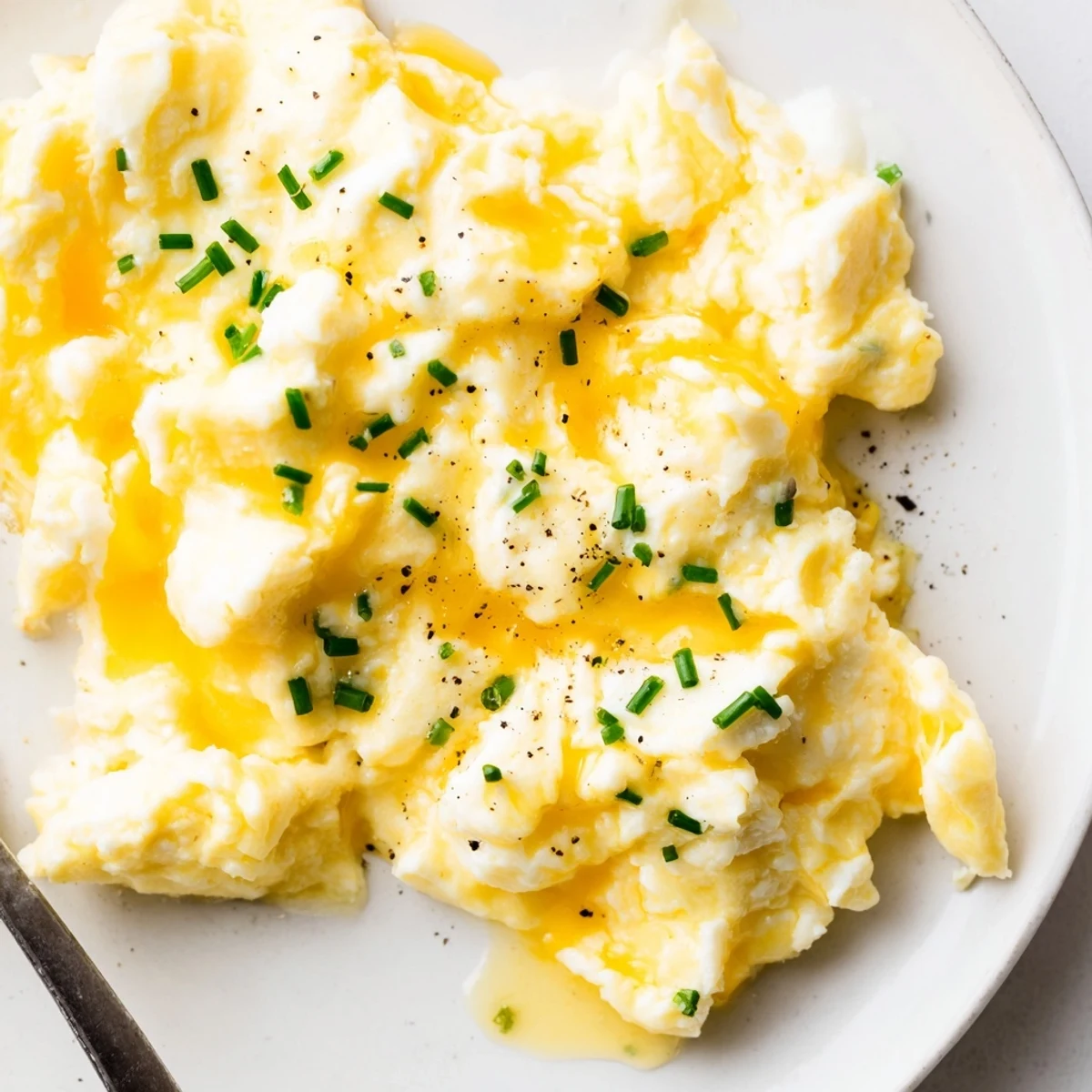
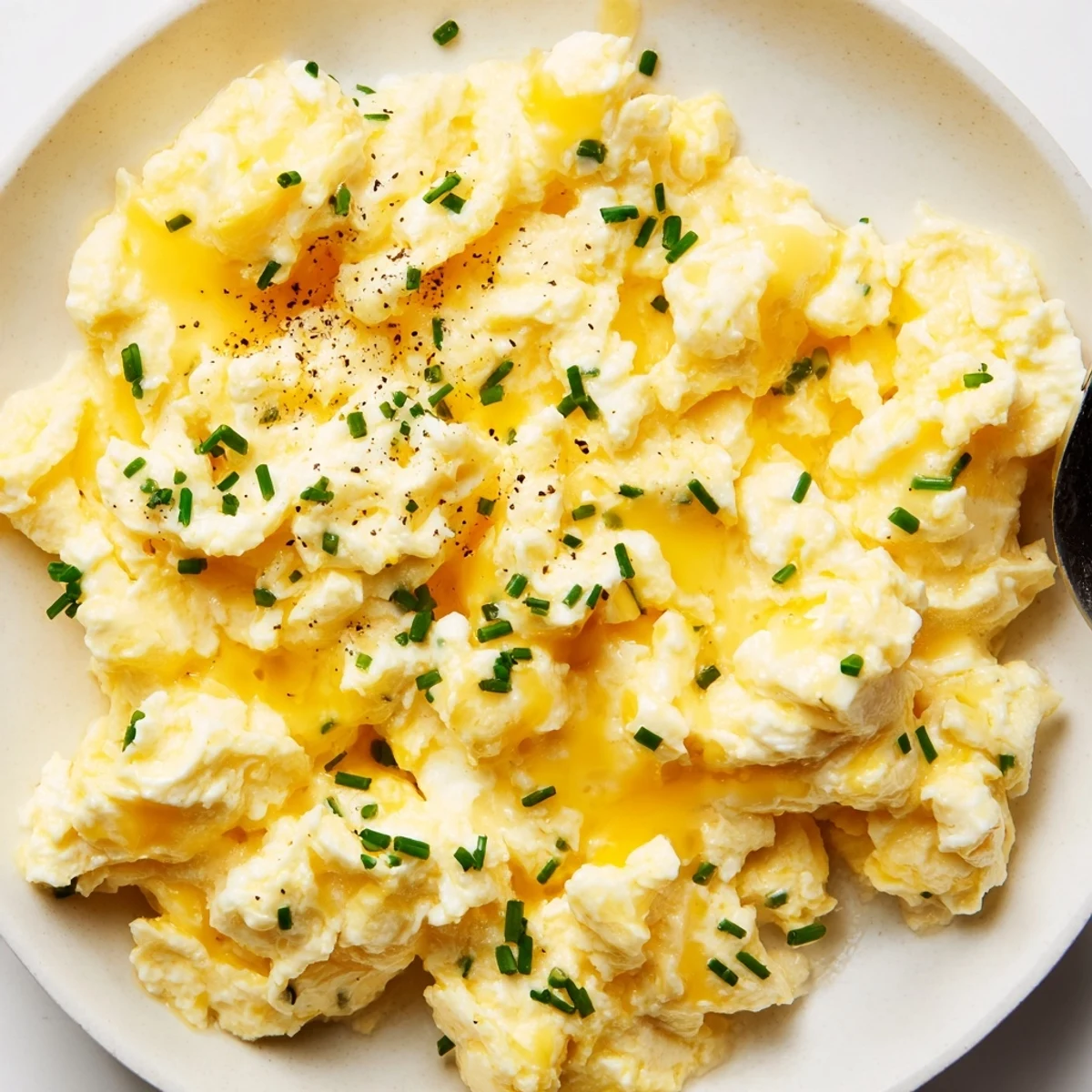
- The eggs should still look slightly wet and glossy when you take the skillet off the heat because they will finish cooking on the plate. This usually takes two to three minutes total, and patience here is what separates rubbery eggs from velvety ones.
- Finish and serve:
- Scatter the remaining chives over the top and slide the eggs onto warmed plates immediately. Serve with toast if you want something to soak up every last creamy bit.
 Save to Pinterest
 There is something about a plate of soft, steaming eggs that makes people linger at the table a little longer, refilling their coffee and telling stories they might otherwise rush past.
What to Serve Alongside
Thick slices of sourdough toasted until golden are my go-to because the tangy crust balances the richness perfectly. Smoked salmon folded in at the last second turns this into something worthy of a holiday brunch with almost no extra work.
Making It Your Own
Spinach wilts into the eggs beautifully if you toss a handful in during the last thirty seconds of cooking. Ricotta swaps in for cottage cheese if you want a milder, more uniform texture without the visible curds.
Tools That Actually Help
A nonstick skillet and a flexible spatula are really all you need, but a good whisk makes the egg mixture smoother in less time.
- A silicone spatula gets into the corners of the pan better than any wooden spoon.
- Warm your plates in a low oven while you cook because hot eggs on a cold plate lose their magic fast.
- Keep a damp towel nearby to wipe your hands between cracking eggs and touching the skillet handle.
 Save to Pinterest
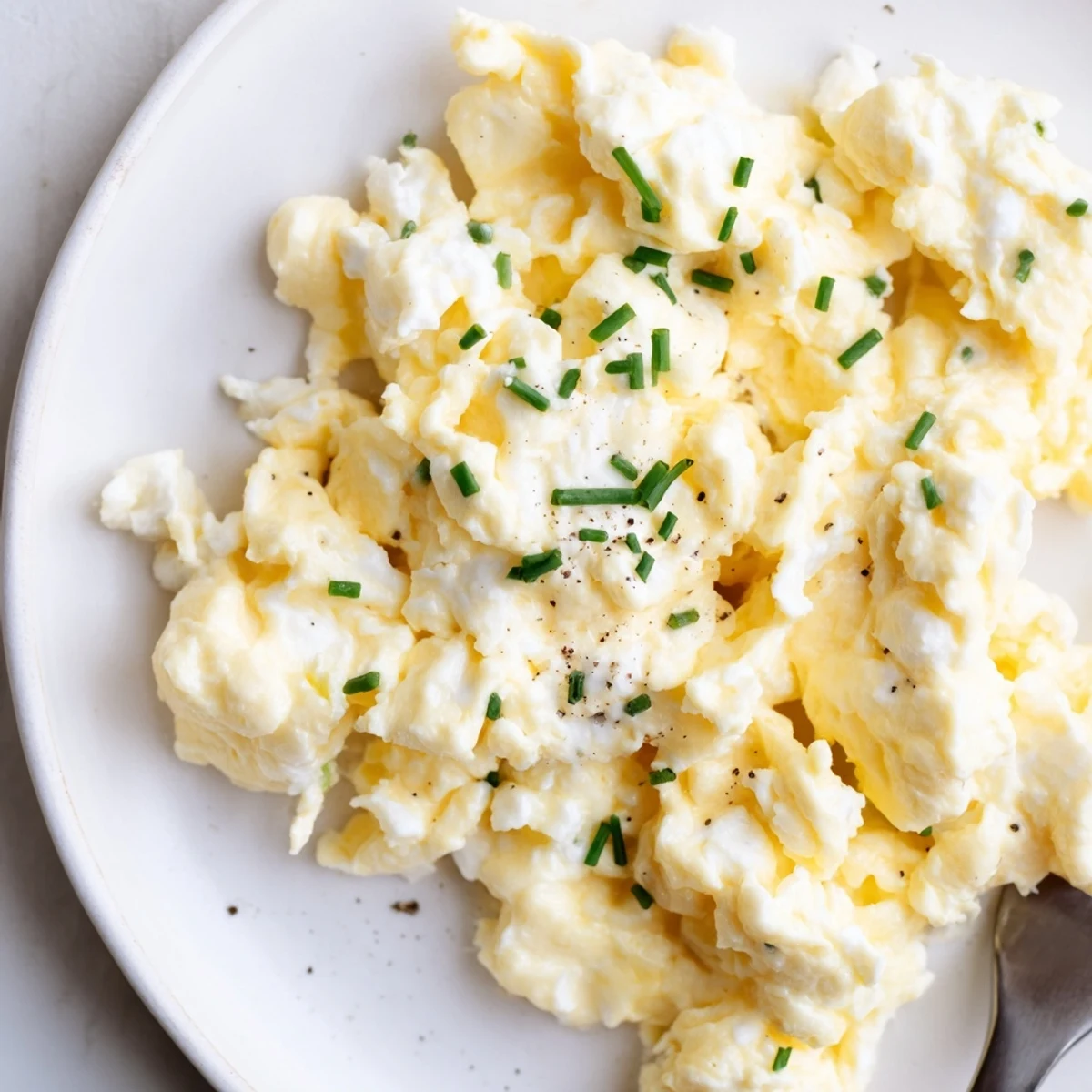
 Breakfast does not need to be complicated to be memorable, and these creamy, herb flecked eggs prove that every single time.
Your Recipe Questions Answered
- → How do I get extra-creamy eggs?
-
Use low heat and remove the pan from the heat while the eggs are still slightly runny; they’ll finish cooking from residual heat. Adding a splash of cream or choosing full-fat cottage cheese also increases creaminess.
- → Can I substitute cottage cheese?
-
Yes. Ricotta gives a milder, silkier texture while Greek yogurt will yield tang and extra creaminess. Adjust salt to taste when using tangier swaps.
- → What heat level should I cook on?
-
Cook over medium-low heat to form soft curds without browning. Gentle, frequent stirring helps keep the curds tender and prevents overcooking.
- → How long do leftovers keep?
-
Refrigerate in an airtight container for up to 2 days. Reheat gently over low heat or in short bursts in the microwave to avoid drying out.
- → What add-ins pair well with this mix?
-
Stir in wilted spinach, chopped tomatoes, smoked salmon, or sautéed mushrooms. Fresh herbs like dill or parsley complement the chives nicely.
- → Any tips for serving?
-
Serve immediately on toasted sourdough or rye to contrast textures. A grind of black pepper and extra chopped chives on top brightens the dish.