
 Save to Pinterest
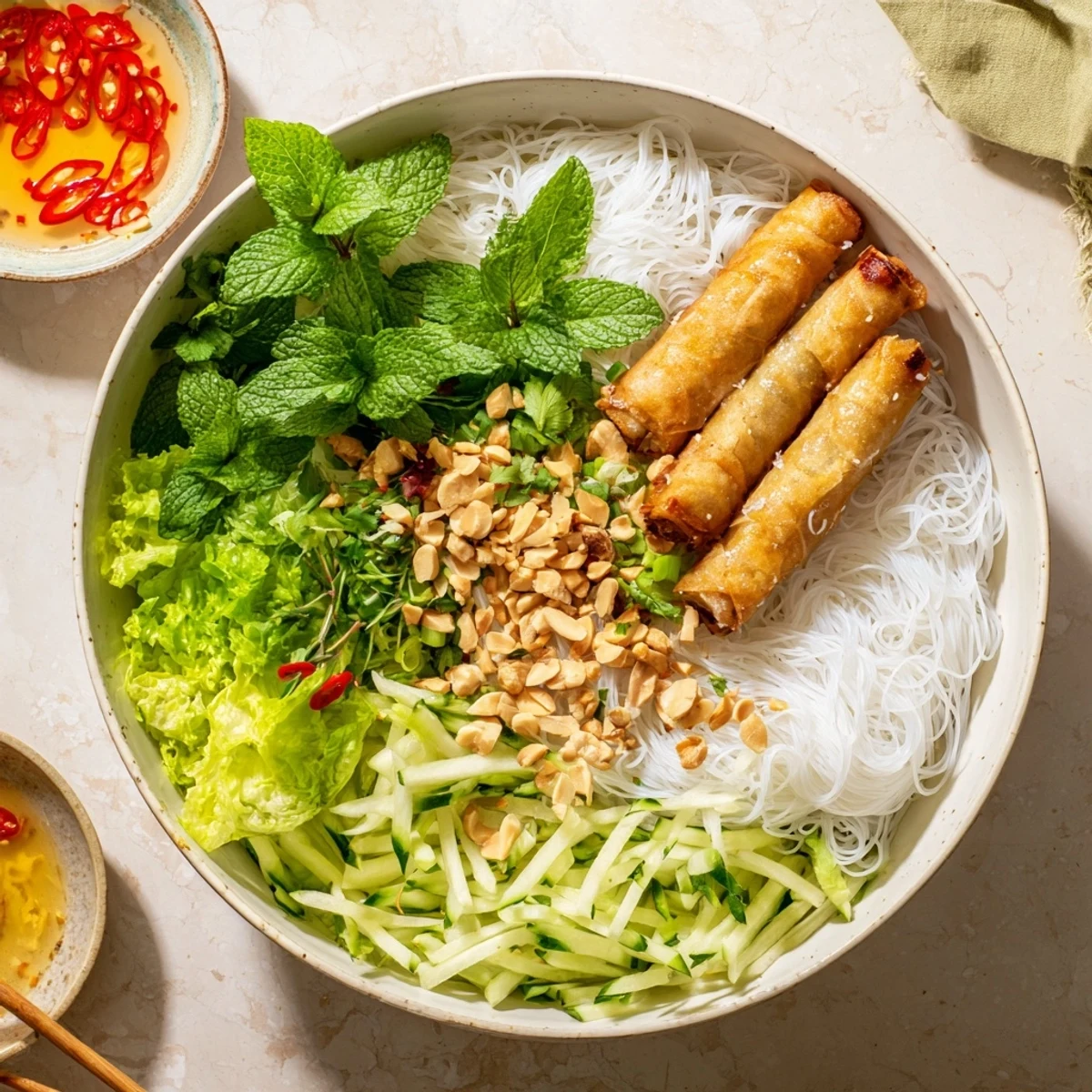
 This vibrant Vietnamese bowl combines crispy fried spring rolls filled with pork and shrimp over a bed of cool rice vermicelli. Fresh herbs like mint, cilantro, and Thai basil add brightness, while cucumber, bean sprouts, and lettuce provide crunch. The star is the homemade nuoc cham dipping sauce, perfectly balancing salty fish sauce with tangy lime juice, sweet sugar, and spicy garlic.
Frying the spring rolls until golden creates irresistible texture that contrasts beautifully with the cool, refreshing noodles. Each bowl delivers a satisfying mix of warm, crispy elements and fresh, crisp vegetables. The dish comes together in under an hour and serves four people generously.
The first time I had Bun Cha Gio was at a tiny Vietnamese spot in Saigon during monsoon season. Rain was drumming on the metal roof while I watched the kitchen staff work like an orchestra, frying spring rolls in rhythm. That crunch when I bit into the first roll, surrounded by cool noodles and that perfect sauce, made everything else fade away. I knew I had to recreate that balance of textures and temperatures in my own kitchen.
Last summer I made this for a group of friends who claimed they didnt like fish sauce. I didnt tell them what was in the dipping sauce, just watched them drizzle it generously over their bowls. By the end of dinner they were asking for the recipe and demanding to know what that magical sauce was. Sometimes the best conversions happen through taste buds rather than persuasion.
Ingredients
- 200 g ground pork: The fat content here keeps the spring roll filling moist and succulent, lean pork can dry out during frying
- 100 g shrimp: Finely chopped adds sweet spots of seafood flavor that complement the pork perfectly
- 50 g glass noodles: These create little translucent surprises in the filling, soak them until pliable before chopping
- 30 g wood ear mushrooms: Their crunch is essential, soak them well and mince finely so they distribute evenly
- 1 small carrot grated: Adds sweetness and color, grate it finely so it doesnt create gaps in your rolls
- 2 cloves garlic: Minced fresh, it mellows during frying but still provides aromatic backbone
- 2 green onions: Both white and green parts, they add subtle onion flavor without overpowering
- 1 large egg: This binder keeps everything together, beats it before adding to the filling
- 1 tbsp fish sauce: The filling needs seasoning too, this provides that essential umami depth
- 1/2 tsp black pepper: Freshly ground makes a noticeable difference in the final flavor
- 12 rice paper wrappers: Work quickly once softened, a damp towel on your counter helps prevent tearing
- 300 g rice vermicelli: These skinny noodles are traditional, soak according to package then rinse with cold water
- 1 cup fresh herbs: The combination of mint, cilantro and Thai basil is non negotiable for authentic flavor
- 1/4 cup roasted peanuts: Chopped coarsely, they add the final crunch that ties everything together
- 4 tbsp fish sauce: Use a good quality brand, it makes up the backbone of your dipping sauce
- 4 tbsp lime juice: Fresh squeezed, the acid balances the intense fish sauce perfectly
- 2 tbsp sugar: Dissolves into warm water first, creating that sweet savory harmony
Instructions
- Mix your spring roll filling:
- Combine pork, shrimp, soaked glass noodles, wood ear mushrooms, grated carrot, garlic, green onions, egg, fish sauce and pepper in a large bowl. Mix with your hands until everything is evenly distributed and the mixture feels sticky and cohesive.
- Prepare your rolling station:
- Fill a shallow dish with warm water and have a clean damp towel ready. Dip each rice paper wrapper for about 5 seconds until pliable, then lay it flat on the towel while you work.
- Roll the spring rolls:
- Place about 2 tablespoons of filling near the bottom third of each wrapper. Fold in the sides tightly, then roll upward, keeping the filling snug but not bulging.
- Fry to golden perfection:
- Heat about 2-3 inches of oil to 170°C. Fry rolls in batches for 5-7 minutes, turning occasionally until theyre deeply golden and sound crisp when tapped.
- Cook the vermicelli noodles:
- Boil according to package directions, then immediately rinse under cold water to stop cooking and prevent sticking. Drain well before serving.
- Whisk together the nuoc cham:
- Dissolve sugar in warm water first, then stir in fish sauce, lime juice, minced garlic and sliced chili. Let it sit for 10 minutes so flavors meld together.
- Build your bowls:
- Divide noodles among four bowls, then arrange lettuce, cucumber, bean sprouts and herbs on top. Slice spring rolls diagonally and arrange three per bowl.
- Finish and serve:
- Sprinkle chopped roasted peanuts over everything. Serve nuoc cham on the side or let everyone drizzle to their preference.
 Save to Pinterest
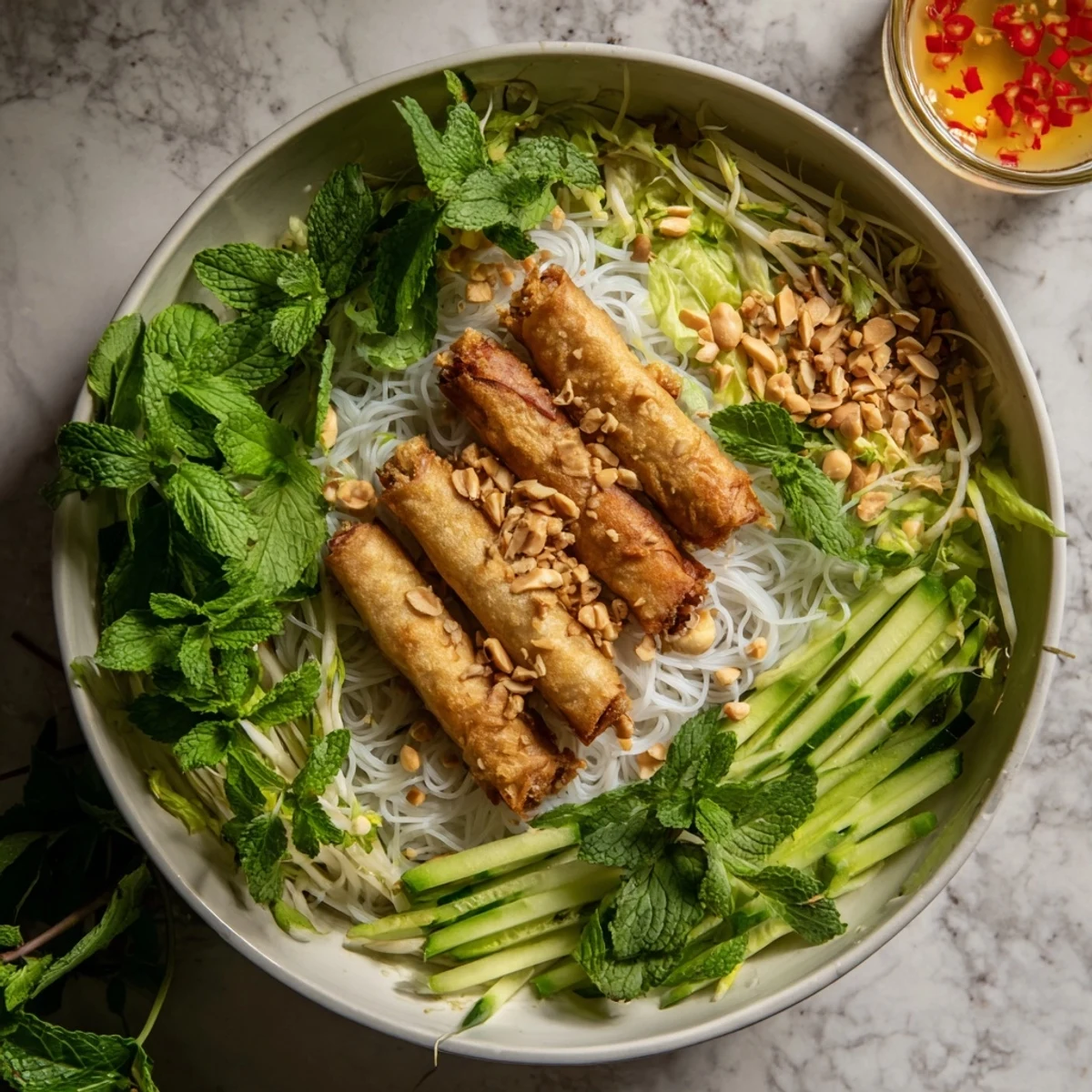
 My friend Linh showed me how her grandmother makes these, and the secret was rolling everything tighter than I thought possible. She said loose spring rolls are a betrayal to the cuisine, and after comparing mine to hers, I finally understood. That tight roll keeps the filling juicy and the wrapper uniformly crisp from end to end.
Getting Your Rice Paper Right
Working with rice paper wrappers takes some practice, and my first attempts were frustrating disasters. The trick is finding that sweet spot between too stiff and too soft, where the wrapper is pliable but not fragile. Work on a damp towel, not a dry surface, and have a second towel ready to cover your finished rolls while you work through the batch.
The Art of Nuoc Cham
This sauce is the soul of Vietnamese cooking, and getting the balance right transforms everything it touches. The classic ratio follows your personal taste, but starting with equal parts fish sauce and water, then adjusting lime and sugar, is a good foundation. Let it sit for at least 15 minutes before serving, as the garlic and chili need time to infuse properly.
Making It Ahead
The filling can be mixed a day ahead and kept refrigerated, which actually helps the flavors meld together. You can also fry all the spring rolls in advance and reheat them in a hot oven for 10 minutes to recrisp. The nuoc cham keeps for weeks in the refrigerator, and honestly gets better with time.
- Wrap fried spring rolls individually in parchment before freezing for last minute meals
- Prep all your vegetables and herbs the morning of, storing them in separate containers
- Keep your noodles rinsed and drained, tossing them with a tiny bit of oil to prevent sticking
 Save to Pinterest
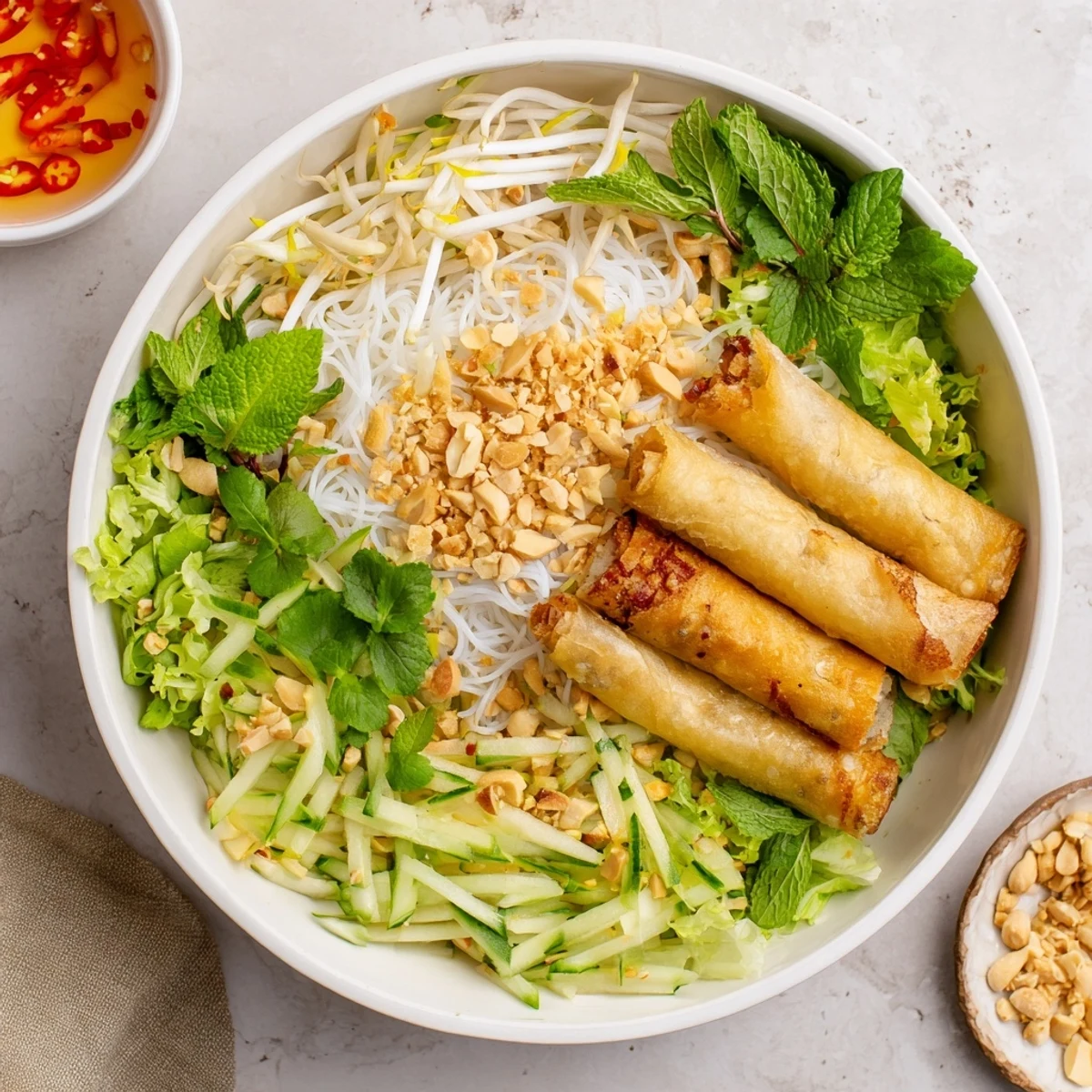
 Theres something deeply satisfying about assembling these bowls, the way the hot and cold elements play together. Every bite becomes a little adventure in textures and temperatures.
Your Recipe Questions Answered
- → What makes bun cha gio different from other spring roll dishes?
-
Bun cha gio uniquely combines fried spring rolls with cold rice vermicelli noodles, fresh herbs, and vegetables. Unlike spring rolls served as appetizers, this dish presents them as part of a complete bowl with cooling elements that balance the crispy, warm rolls. The nuoc cham dipping sauce ties everything together with its perfect sweet, salty, sour, and spicy notes.
- → Can I make the spring rolls ahead of time?
-
Yes, you can assemble uncooked spring rolls up to 4 hours ahead and refrigerate them covered with a damp towel. For longer storage, freeze them uncooked for up to 1 month. Fry frozen rolls directly without thawing, adding 1-2 minutes to cooking time. Cooked rolls stay crispy for about 2-3 hours at room temperature.
- → How do I prevent rice paper wrappers from tearing?
-
Work with one wrapper at a time and keep the rest covered with a damp cloth. Dip the wrapper in warm water for just 3-5 seconds until pliable but not soggy. Lay it on a damp towel while filling. Don't overfill—about 2 tablespoons per roll prevents bursting. Roll tightly but gently, folding in sides before rolling to the end.
- → What can I substitute for fish sauce in the dipping sauce?
-
For a vegetarian version, use soy sauce or tamari mixed with a splash of rice vinegar and a pinch of seaweed for umami. Coconut aminos work well but are milder, so you may need to add extra salt. These substitutions will change the traditional flavor profile slightly but still create a delicious dipping sauce.
- → How do I know when the oil is at the right temperature for frying?
-
Heat your oil to 170°C (340°F). If you don't have a thermometer, test by dipping a wooden chopstick into the oil—if bubbles form steadily around it, the oil is ready. Another test: a small piece of wrapper should sizzle and rise to the surface immediately. Maintain medium heat throughout frying to ensure the rolls cook through without burning.
- → Can I bake or air-fry the spring rolls instead of deep-frying?
-
Yes, brush the assembled rolls lightly with oil and bake at 200°C (400°F) for 15-20 minutes, turning halfway. For air frying, cook at 180°C (350°F) for 10-12 minutes until golden. Both methods yield healthier results with less oil, though the texture will be slightly less crispy than deep-fried versions.